

For decades, crooked teeth were seen simply as bad luck — a genetic predisposition requiring tooth extraction and braces. These days this has become almost a rite of passage for teenagers. Nevertheless, awareness is growing that such treatment can worsen sleep apnoea and temporomandibular joint dysfunction, leaving people with lifelong health problems. Let us examine how orthotropics — the method of horizontal facial development devised by British doctors John and Mike Mew — views this problem, and how it differs from traditional orthodontics.
Why Do Teeth Become Crooked?
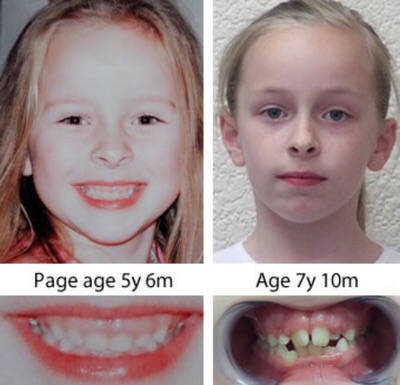
Although we have discussed this topic more than once in this blog, looking in detail at how correct tongue position and the upper jaw affect facial beauty, for those unfamiliar with these articles we will briefly ‘run through’ the main concepts.
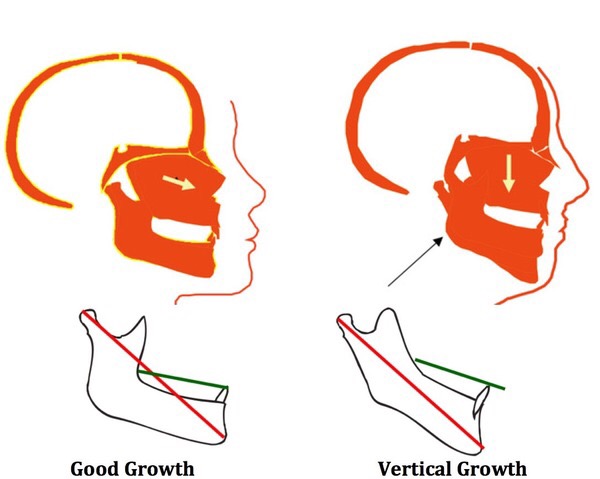
Modern people’s food has changed completely even over just a few decades: we hardly eat the tough, hard food our ancestors ate. The abundance of soft food requiring no effort to chew has reduced the work our chewing muscles do. Children are not breastfed long enough, so their oral apparatus does not develop and the transition from infant to adult swallowing is disrupted. In adult swallowing, the tongue should be pressed firmly against the palate. In this position its force constantly pushes the central facial bone upward, allowing broad dental arches to develop with enough room for all adult-sized teeth. When the central facial bone is raised, the distance between the upper lip and nose is also attractively shortened, and the eyeballs receive sufficient support. All of this affects facial growth, providing attractive three-dimensional horizontal development.
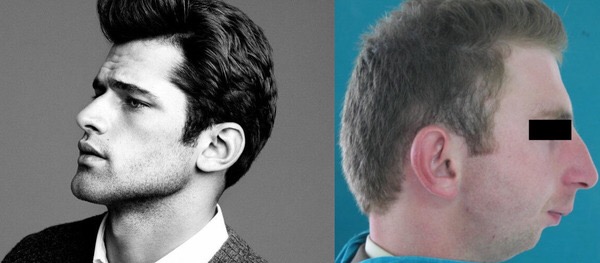
Unfortunately, because the conditions for normal horizontal facial development are absent, many children’s faces begin growing downward (vertically) from early childhood. Double chins, flat faces with tired eyes and crowded teeth develop: when the central facial bone drops, the upper dental arch narrows and there simply is not enough room for the teeth! In this situation, the lower jaw is also forced backward.

The second major problem of our time is the constantly elevated environmental allergen level, which causes nasal congestion in children. If you cannot breathe through your nose, you must open your mouth and lower your tongue onto the lower teeth, which again lowers the central facial bone, narrows the upper row of teeth and causes crowding. In mouth breathers, the face lengthens (‘drops’), its transverse area decreases, leading to crowded, crooked teeth and affecting the airways.

Good medicine means identifying and preventing the causes of a problem, rather than merely relieving symptoms and perhaps worsening the underlying problem. Orthotropics founders John and Mike Mew call on the modern world to adopt a scientifically grounded approach to treating crooked teeth, aimed at prevention and understanding the consequences of improper development for the face and respiratory system, rather than ‘treating’ the consequences and symptoms.
What Is Happening in Orthodontics Today
In the article on how braces damage the face, we already saw that orthodontists focus only on aligning teeth, ignoring the position of the facial bones, the rest of the skull and the temporomandibular joints. Braces pull the central facial bone, the maxilla, backward and downward, with the consequences described above. When they cannot find enough room on the dental arch for crowded teeth, traditional orthodontists can think of nothing better than extracting them. This leads not only to a loss of facial beauty but also to fairly serious health consequences.
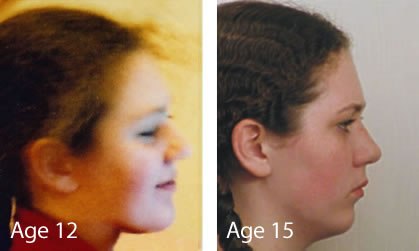
In the late nineties, Professor John Mew gave an interview for Dispatches, presenting clear evidence of the harm braces cause to the face. Mary is one such patient. At thirteen, she underwent orthodontic treatment with braces that included removing four teeth and using elastics to close the resulting spaces. Profile photographs clearly demonstrate the damage to the lower part of her face, including a change in the lower-jaw angle, the formation of the chin, a noticeable reduction in the distance between the nose and lower lip, and a change in the direction of the tilt of the mouth corners. Treatment also narrowed her airways, making her prone to nasal congestion. Before performing all these irreversible procedures, the orthodontists did not inform her of an alternative (although they themselves may not have known about it).
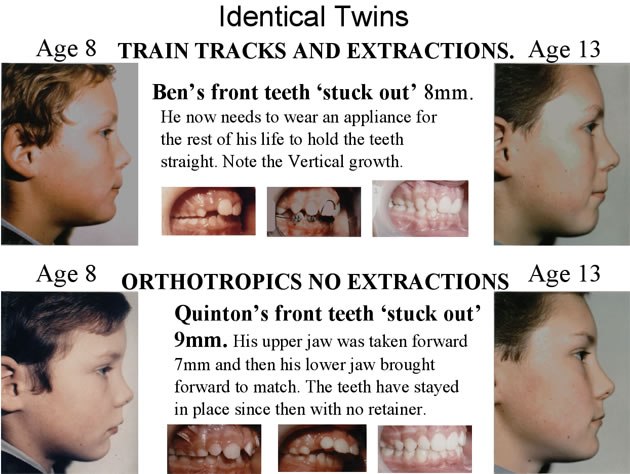
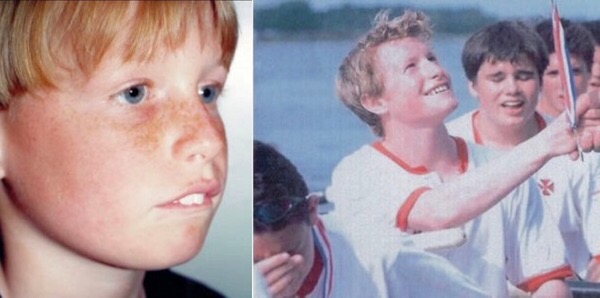
The programme also showed twins: one (above) had braces and four crowded teeth removed; the other (the boy below) reached Professor Mew in time and underwent orthotropics treatment with upper-jaw expansion. We have already discussed the facial changes in both cases in the article on how braces damage the face, so we will not repeat ourselves, but look at how these boys came to look as adults.
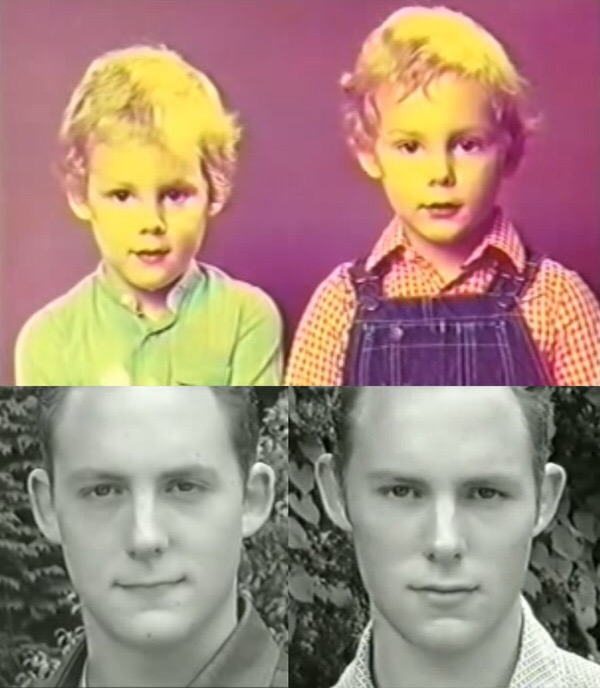
Whereas the twins previously looked exactly alike (one boy is sitting in the photograph), today these are two completely different faces. The young man treated with braces has very noticeable facial distortion, especially in the lower part, while his twin treated with orthotropics has an attractive face, harmonious in every respect.
Unfortunately, despite the considerable evidence Professor Mew presented, the programme provoked quite a strong reaction in British orthodontic circles. Many studies were even conducted ‘proving’ that braces do not cause facial damage. But Professor Mew was repeatedly excluded from these studies, and they did not address the questions he raised. His son Mike also said in a video on his YouTube channel that his father was treated very rudely and had to hear many insults from traditional orthodontists.
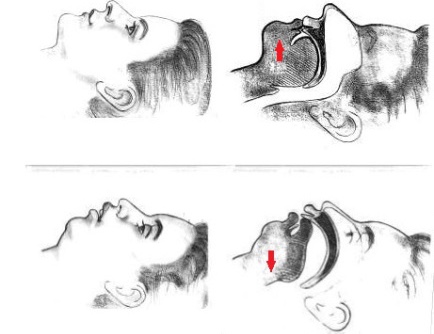
They also ignored evidence of the effectiveness of orthotropics myofunctional exercises for correct tongue positioning in eliminating sleep apnoea. Briefly, if the face lengthens and ‘drops’, the tongue inevitably moves towards the airways. Professor Stephen Sheldon of Chicago believes that attention deficit and hyperactivity in children are caused by mild sleep apnoea, which is often difficult to diagnose. Today, increasing numbers of thoughtful specialists in many countries agree that proper facial development is important in preventing crooked teeth and their associated health problems. These are doctors researching links between orthodontics and diet, its effects on airways and gum problems: Steven Lin, Peter Ungar, Marianna Evans and Buteyko, known for their publications, and the groups Myobrace, Oral Help Group, Connecting Heads and Face Focused. Nevertheless, horizontal facial development is not yet mainstream, and orthodontic treatment when a problem arises continues focusing on eliminating symptoms rather than seeking causes.
Orthotropics and Traditional Orthodontics
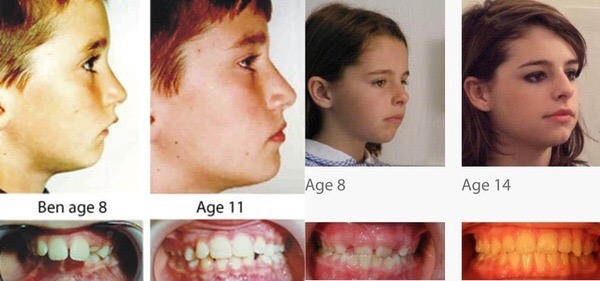
Let us briefly sum up: when aligning teeth with braces, traditional orthodontics often draws the patient’s face backward and downward. Orthotropics primarily aims to widen the upper dental arch and raise and move the central facial bone upward. Orthotropics gives a child room for all thirty-two teeth in the mouth. To achieve this in practice, orthotropics uses the intraoral Biobloc appliance alongside teaching correct tongue position and adult swallowing, known as myofunctional correction. But this method is mainly suitable for children under twelve (adults need to turn to the similar method of orthocraniodontics). At the same time, myofunctional exercises allow even adults to achieve significant horizontal facial development, although they have to make more effort than children to obtain an effect, and it takes somewhat more time.
But according to its creators, the main task of orthotropics is spreading knowledge and information on preventing facial deformity in children and teaching correct tongue position from childhood. They believe this enables people to acquire attractive faces and broad dental arches with enough room for every tooth, and avoid any orthodontic treatment in the future.
No comments
Ask a careful question or add useful context. New comments are reviewed before publication.
No comments yet. You can start the discussion.