

On this page you will find the most frequently asked questions about the Starecta method, which may arise both before deciding to undergo treatment with this method and during treatment.
1. How long does complete rebalancing of the body take?
That depends on the severity of the imbalance, your overall health and the structure of the muscular compensations your body has created over the years. So balancing may be completed within a year in simple cases, and take up to ten years in the most complicated ones. On average, this process takes two or three years. An athlete with an already vertical body structure and a quickly responding body can improve both posture and sporting performance in a short time. At the same time, correcting 15°–20° scoliosis may take as much as four years.
2. Why does the method create space between the posterior teeth (molars and premolars)?
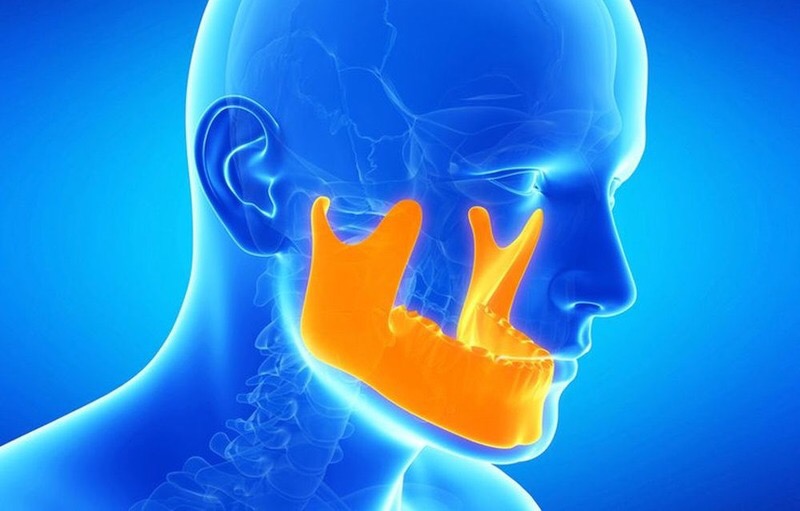
The skull rests on the jaw. The Rectifier acts as a rod whose thickness makes the jaw work as a lever. As a result, the skull takes up an ideal physiological position and, consequently, the spine stretches. This means the skull changes its inclination relative to the jaw and rises in the molar and premolar region, where adequate tooth height is missing. The space created between the upper and lower dental arches is proportional to the missing bite height. In any case, you can avoid creating space between the teeth by following the soft application of the method (wearing the Rectifier for 4–10 hours a day).
3. What should I do about the space that has formed between the upper and lower teeth at the end of treatment? Crowns? Restorations?
At the end of the body-balancing process, the problem of the space formed between the teeth can be solved in several ways. A special splint reproducing the bite height, or another removable or fixed orthodontic device, can be made. You need to see a specialist to have this work done. Alternatively, the Rectifier can be worn only at night to maintain the results. If you do not want to create space between the teeth, you can follow the soft application of the method (wearing the Rectifier for 4–10 hours a day). You can also read about possible solutions to this problem in this article.
4. Do I need to wear the Rectifier all the time?
That depends on the results you want to achieve. If you need significant results, you will have to follow the hard approach (wearing the Rectifier for 16–22 hours a day). The hard approach inevitably creates space between the teeth. Otherwise, you should follow the soft approach (wearing the Rectifier for 4–10 hours a day).
5. How will I be able to eat with the space created between the teeth?
When space is created between the teeth, you should eat with the Rectifier if it is the old model. You cannot eat with the new Plug and Play. Moreover, if you follow the soft approach, in which no space is created between the teeth, you can eat without the device with no problems.
6. What components is the Rectifier made of?
They are nontoxic and hypoallergenic materials: dental resin, biocompatible thermoformed plastic and a connecting structure made of titanium.
7. Does the Rectifier stick to the teeth? How will I eat?
The Rectifier is removable; it does not stick to the teeth. Only the new bite with it is registered in the mouth. You can eat without the Rectifier, or you can eat with it (the old model), especially if space forms between the arches. It is up to you.
8. Is the Rectifier noticeable when talking?
If someone specifically looks at your mouth, the Rectifier may be visible. But in general, people do not notice it.
9. What is the difference between a dental splint and the Rectifier?
The Rectifier differs from an ordinary dental splint in that it is used according to a particular method.
10. How do I use the Rectifier?
We make a ready-to-use device for you and provide instructions on how to activate it and use it subsequently.
11. Can I play sports during balancing?
That depends on your situation. Some people play sports, others do not. You need to work this out yourself.
12. I have all my wisdom teeth. Will the Rectifier work in my case?
Of course. The Starecta method does not depend on the presence or absence of wisdom teeth.
13. Do I need to wear the Rectifier 24 hours a day, seven days a week?
You can choose the hard or soft approach. If you want significant results while creating space between the teeth, you need to follow the hard approach (wearing the Rectifier for 16–22 hours a day). Alternatively, you can follow the soft approach, which does not create space between the teeth (4–10 hours a day).
It does not matter whether you wear the Rectifier during the day or at night: what matters is wearing it for at least 16 hours a day (with the hard approach), or at least four hours (with the soft approach). These hours do not need to be consecutive; it is enough for them to be cumulative. Moreover, it is important to remove the Rectifier if you feel your body is tired of straightening (this work requires a great deal of energy from the body). It is important to let the body recover.
14. How can I eat with the Rectifier?
You can remove the Rectifier to eat.
15. What if I urgently need to speak in public?
The Rectifier comes with a small plastic box in which you can easily and safely place your Rectifier.
16. Will a large gap between the upper and lower teeth be a result of treatment, counterbalancing its numerous positive effects?
People with serious cases of kyphosis and lordosis who follow the hard approach (16–22 hours a day) may indeed develop increased space between the teeth.
17. Will all the results achieved with the Starecta method be lost if, with the space formed between my teeth, I stop wearing the Rectifier?
Yes, the result may deteriorate if you follow the hard method and, on removing the Rectifier, allow the skull to descend into the space created between the teeth by the device. In fact, the incorrectly positioned skull will begin pressing on the spine again, restoring the distortions that the Starecta method eliminated.
18. What do you think about the importance of tongue position in the development of the skeletal structure?
It has been recorded that when we wear the Rectifier, our tongue automatically takes up the correct position. This helps skull development and also improves the support the tongue provides to the facial bones of the skull.
19. Is the Rectifier worn on the lower jaw?
Yes, the device is placed on the lower jaw.
20. Does your method help with dystonia?
The Starecta method was originally created to balance the body by changing the position of the skull and jaw and straightening the spine. This may also benefit people suffering from dystonia.
21. Does the Rectifier's bend serve any function, or does it simply connect the two parts of the device?
The bend is intended to give the Rectifier greater flexibility while it is being fitted to the shape of the dental arches. Moreover, this titanium shape allows the dental arches to expand during balancing.
22. Can you talk normally with the Rectifier in your mouth?
Indeed, learning to talk with the device may take up to several weeks.
23. Can the upper dental arch be expanded with the Rectifier?
During treatment, the lower jaw can move normally in all directions. During lateral movements in balancing, the lower jaw pushes the upper dental arch outwards. The Rectifier holds all these movements in stable occlusion, preventing the teeth from touching one another. To improve rotation, the skull is literally separated from the lower jaw, creating resistance that is then discharged through the teeth. Thus, the lateral movement during motion expands the upper dental arch too.
24. How many times a year should the bite registration on the Rectifier be renewed?
You should make at least 24 new registrations a year. It needs to be renewed every 15 days.
25. Will the Rectifier fit the size of my mouth?
The Rectifier's design allows it to adapt to any oral cavity size. A separately sized device can be made for children.
26. Do I need to heat the Rectifier before using it?
Yes, before use, the Rectifier needs to be placed in hot water at about 65° until the white part of the device becomes transparent.
27. Will the front teeth be apart while wearing the Rectifier?
Yes, the Rectifier creates a small gap of 3–10 mm between the upper and lower front teeth.
28. Does the Rectifier work as a modified Gelb (the splint developed by Dr Gelb)?
No, the Rectifier has nothing in common with the Gelb.
29. I am missing two molars on the left side. Can I use the Rectifier?
No, if two large teeth are missing on the same side, you cannot use the Rectifier. You need to have implants placed first.
30. I have bridges in my mouth. Is the splint suitable for me?
Definitely not. The Rectifier balances the skull bones, and a bridge will block movement of the cranial sutures. This subject was discussed in more detail on our forum.
31. Do I need to take any preliminary measurements before ordering?
No, the Rectifier is made in a universal size and, thanks to its design, is then fitted to the required size.
32. Does the Rectifier perform the function of an ALF appliance?
The Rectifier differs from ALF, yet it also performs the function of naturally expanding the upper dental arch.
33. How many times can the Rectifier be re-registered?
You can register a new occlusion an unlimited number of times simply by placing the Rectifier in hot water.
34. How long can the Rectifier be used?
If you do not break it, you can use it for up to ten years.
35. How does the old Tailored Rectifier differ from the new Rectifier Plug and Play?
Tailored Rectifier is a separate, individually made device. It is distinct from Rectifier Plug & Play. The thermoplastic Plug & Play splint is placed in hot water, the new occlusion is registered in the softened material, and the material is allowed to harden.
The new Rectifier Plug & Play can rub a little at first.
36. Can I use the Rectifier if my jaw protrudes forwards?
Yes, this is also possible with a forward-protruding jaw.
37. After starting to use the Rectifier, do I need to wait before beginning exercises, such as push-ups?
No, you can do exercises immediately after starting to use the device.
38. Is the Starecta method effective if the neck muscles are in constant spasm?
On the contrary, one of Starecta's immediate effects is a reduction in neck muscle spasms.
What you should know before starting Starecta — here.
Starecta Rectifier: step-by-step instructions — here.
__________________
The original article is on starecta.com
Russian translation
60 comments
Ask a careful question or add useful context. New comments are reviewed before publication.
If one molar is missing, it can be used. Tailored Rectifier is a separate, individually made device. It is distinct from Rectifier Plug & Play.
Jaw & Body shop offer:
Starecta Rectifier — Starecta Rectifier
Body Balancer — Body Balancer
Descriptions, current prices and ordering are on the product pages.
Tailored Rectifier is a separate, individually made device. It is distinct from Rectifier Plug & Play.
Jaw & Body shop offer:
Starecta Rectifier — Starecta Rectifier
Body Balancer — Body Balancer
Descriptions, current prices and ordering are on the product pages.