
In the previous articles in this series on proper tongue position and the adult type of swallowing, we looked at how tongue posture affects facial beauty and considered specific myofunctional exercises. To sustain motivation in practice, it is always useful to see results, so here we will look at inspiring before-and-after photographs of people who underwent myofunctional correction.
Most of these results were achieved through the method its users call mewing, associated with the British doctor Mike Mew. Other results combine myofunctional therapy with the action of the Bioblock expanding appliance, or combine Dr Mew’s technique with the splint used in the Italian Starecta method.
Benefits of myofunctional correction
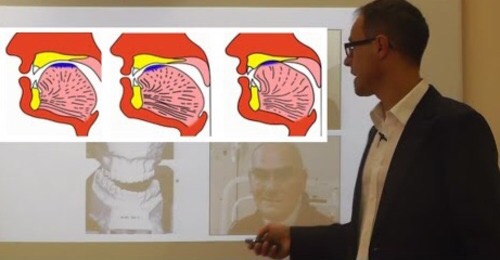
Myofunctional therapy not only affects facial beauty and harmony, but in the author’s view can help address a broad range of health problems, from airway issues such as snoring and apnoea to headaches, digestive problems and temporomandibular-joint dysfunction. In the latter case one must be extremely careful and stop the exercises if the condition worsens or facial pain appears. In other cases, the author considers myofunctional therapy an excellent complement to TMJ treatment with a specialist.
Myofunctional therapy is a re-training of the facial muscles and a restoration of normal patterns of their work, even if unfavourable conditions for development arose in childhood: absent or insufficient breastfeeding, dummy or thumb sucking, open-mouth breathing, and so on. Myofunctional correction includes exercises for the tongue muscles and changing habits of incorrect chewing and swallowing. The author also connects working through an underdeveloped sucking reflex with loosening psychological blocks connected with satisfying one’s wishes and needs, learning to recognise and receive what one wants.
This is a very interesting process of self-development. The author refers readers to John Mew’s Malocclusion: The Orthotropic Approach, Carol Vander Stoep’s The Mouth Matters, and Joy Moeller’s The Tongue Finds Its Home. In this account, myofunctional correction addresses not only improper jaw function but many problems of development in other areas of a person’s life.
Results of myofunctional correction through mewing
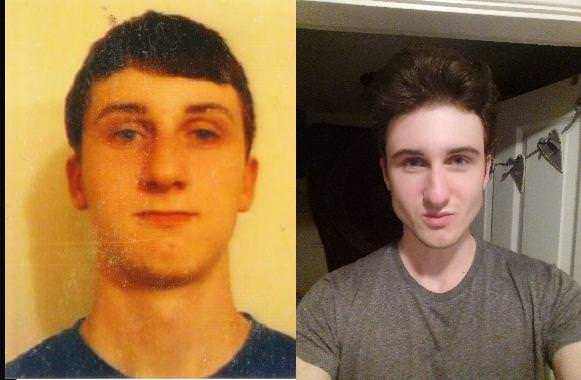
1. An archive participant, photographed first at age twenty and then at twenty-one.
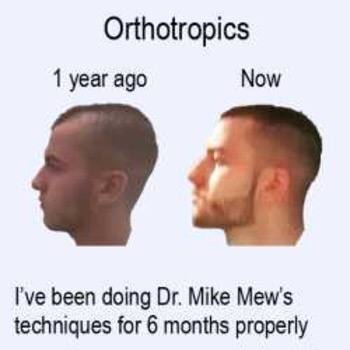
In the participant’s words: “I do not believe in unattractive people. I think most faces are improperly developed, which affects their bone structure. The bony structure of the skull is the foundation of appearance, and if it develops incorrectly, the facial muscles are affected too. My upper and lower lips became the same size. An unexplained change is that the lines running down from my nose disappeared. Perhaps this is because my maxilla moved a few millimetres forward. I used to have an underbite, but thanks to the maxilla the situation has now levelled out.”
“I wonder how far these changes will go. I will continue for several more years so that my bone structure changes the facial muscles too. We should shape our faces just as we shape our bodies. In both cases we must provide the right conditions, and Dr Mike showed how to do it. I have been doing myofunctional exercises for six months and already have these changes. My facial asymmetry began to disappear and I corrected my head position; this is very important and should not be underestimated. I chew on the left side. I had chewed on the right all my life, and it was genuinely shorter than the left. Now I chew four hours on the left and two on the right to balance my face, and the method works well. My teeth straightened and my TMJ problem resolved.”
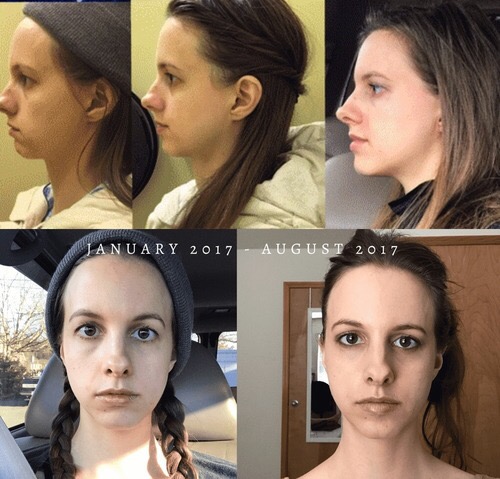
2. Another archive participant began mewing at eighteen; the second photograph was taken a year later, at nineteen.
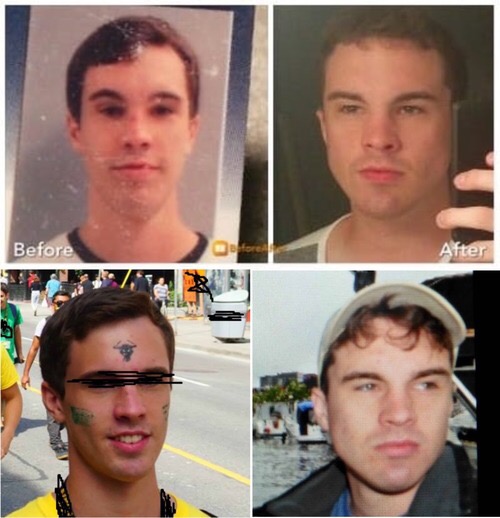
In the participant’s words: “One year of constant hard mewing, a constant battle with my face, and three months of chewing Mew gum. Life certainly changed. From this hard approach my jaw and skull hurt constantly, as if I were wearing braces. I strongly recommend hard mewing: put the tongue on the roof of the mouth, press the whole tongue to it from the base, and do it all day, every day. Do it consciously and really try to feel how every bone in your skull responds to this force. If you have worked in a gym, you have probably heard of the mind-muscle connection: it is the same here. But do not push merely for the sake of pushing. First spend time becoming aware of the movements.”
“I supplement the myofunctional work with vitamins K2 and D and calcium, and chew Mew gum for an hour a day. Sometimes I wake at night if I overdo the training. A year ago I tried Myobrace for a month so that my tongue would be in the proper position at night too, but honestly it restricted my palate more than I wanted. Unfortunately I sleep on my stomach, and that is clearly not in my favour. But while awake I concentrate every minute on tongue position and visualise changes in my facial bones. You must want it. You need it. Fight for it.”
3. Michale Fetzik, about fifty, had suffered migraines for twelve years before using myofunctional correction.
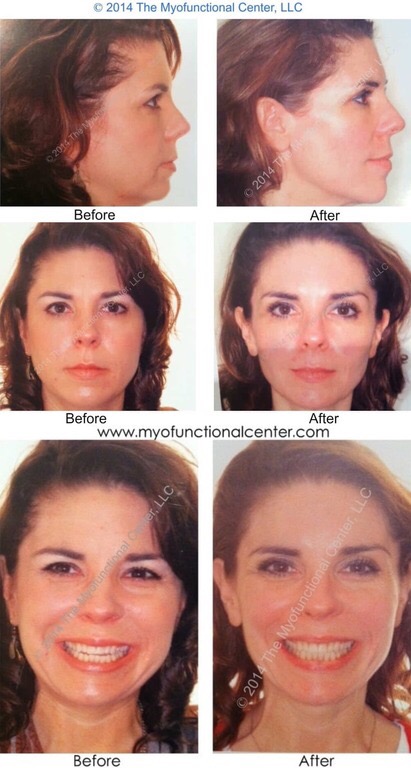
Her comment: “People often ask me: ‘Did you really achieve such changes merely by changing tongue position?’ Yes: I place the tongue in full contact with the palate, from base to tip. Given that I am almost fifty, I am amazed by the results. My aim was to get rid of headaches and pain in my neck and shoulder. I tried TMJ orthodontics, but in six months of treatment I only reduced shoulder and neck tension; the headache cycle did not break. I can assure you that my personal journey was fuelled by a fire to help others get out of a terrible condition. Facial-muscle tone changes people’s lives. Now I focus on work with infants and try to understand the patterns and factors that affect airway problems and improper facial development from birth. My own results are simply shocking. My advice: the tip of the tongue should be in the hollow of the palate behind the front teeth, and the tongue should literally stick to the palate along its full length like a suction cup. When you swallow, the tongue makes a soft thrust against the palate with negative suction. I hope this helps.”
4. An archive participant, twenty, had always slept on one side so that the jaw shifted sideways, and described TMJ dysfunction and progress after eight months of mewing.
5. A young Asian man’s result from using mewing.
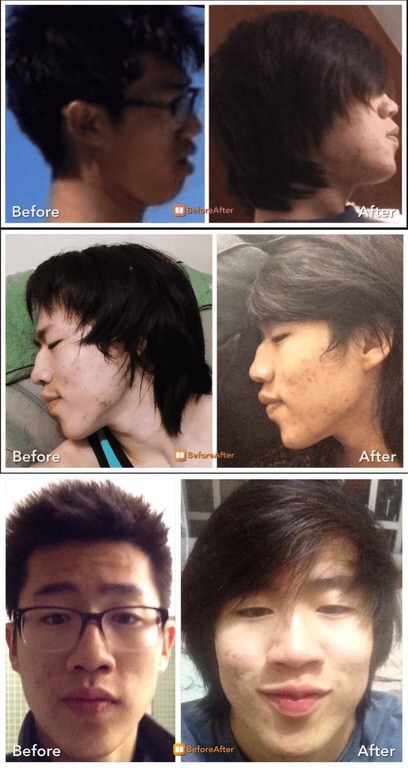
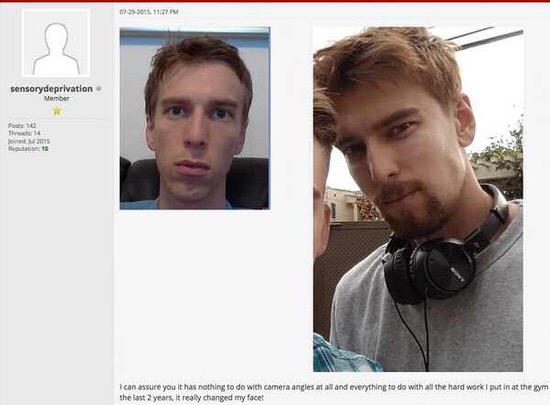
6. Further examples of mewing results, achieved on average in one year. The man in the second photograph from the top also lost weight and attended the gym. The man in the lower photograph achieved his result with mewing and gum chewing over two years, and stated that the photographs did not use camera-angle tricks.
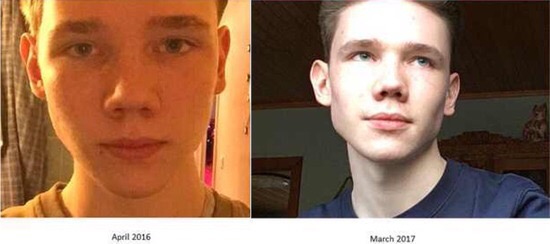
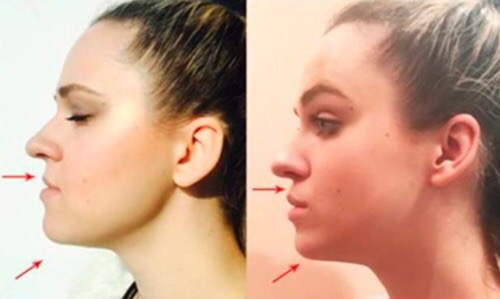
7. A result of myofunctional therapy shown by a dental practice.
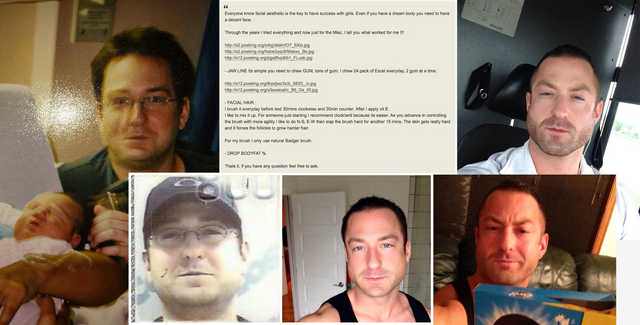
Results of myofunctional correction combined with Bioblock
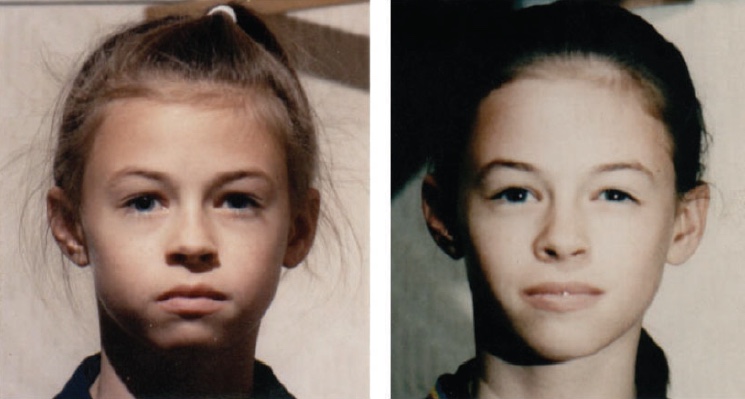
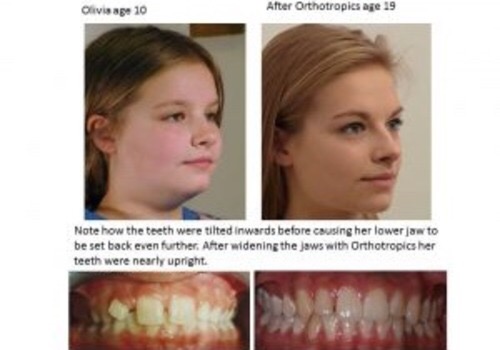
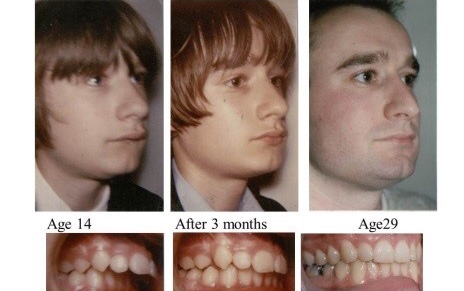
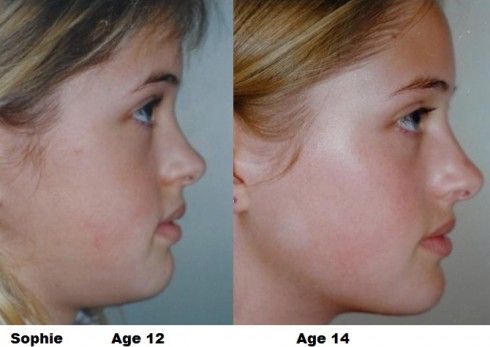
In orthotropics, the British doctors John and Mike Mew teach their patients correct tongue position and swallowing alongside use of the Bioblock intraoral appliance. English-language sites offer playful myofunctional exercises for children, intended for ten minutes a day, with progression through levels and rewards. The author had not encountered comparable resources in Russian. Returning to the before-and-after photographs, the author considers the results striking enough to leave without further comment.
Results of myofunctional correction with a Starecta splint
Ken Leaver is an American man who suffered from neck and shoulder pain, lack of concentration and “brain fog”. He used the Italian Starecta body-balancing method for the brain-fog problem. In his account, the method resolved his cervical scoliosis and brought the body towards symmetry, but did not resolve cranial torsions; he also had a maxilla that was too short. He therefore decided to combine Starecta with myofunctional exercises.
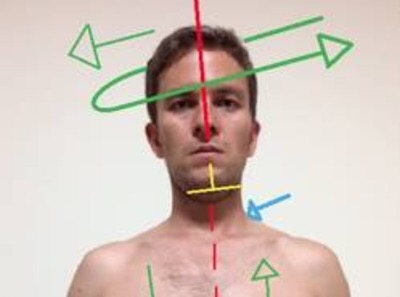
According to Ken, in 2011 he suffered from facial tension and asymmetry. In 2015 he wrote: “I relaxed many facial muscles with the Starecta splint and myofunctional exercises. My face now has a much healthier shape.”
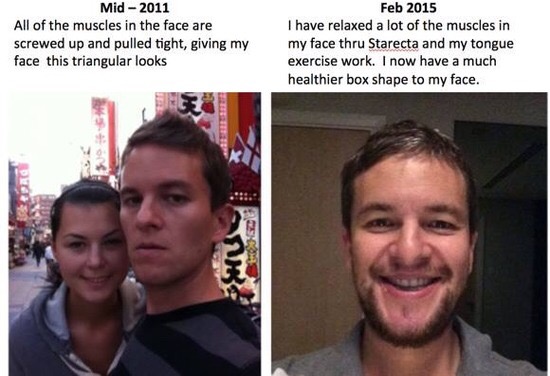
Here is how myofunctional exercises advanced his maxilla in less than a year:
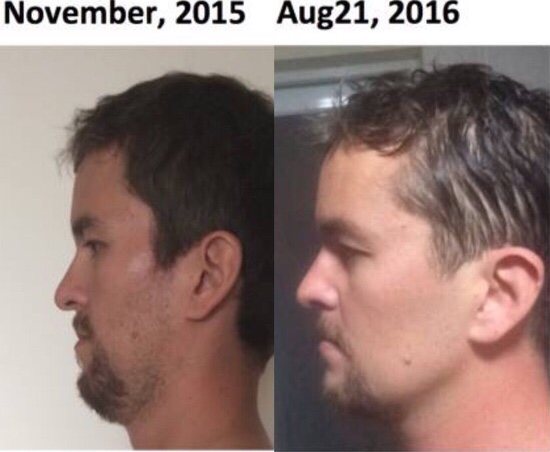
Ken also experimented with Myobrace and with an ALF appliance while wearing the Starecta splint. The author notes that these are Ken’s personal impressions and cannot say more, but considers the experience genuinely interesting and potentially useful to others.
Conclusion
As these examples show, the author considers myofunctional therapy useful both as a stand-alone means of improving facial structure and addressing some illnesses, and when used with other kinds of treatment. It requires persistence and stable motivation.
Read Maxilla: the bone of beauty.
Read Mewing: results of “brutal guys”.

34 comments
Ask a careful question or add useful context. New comments are reviewed before publication.