
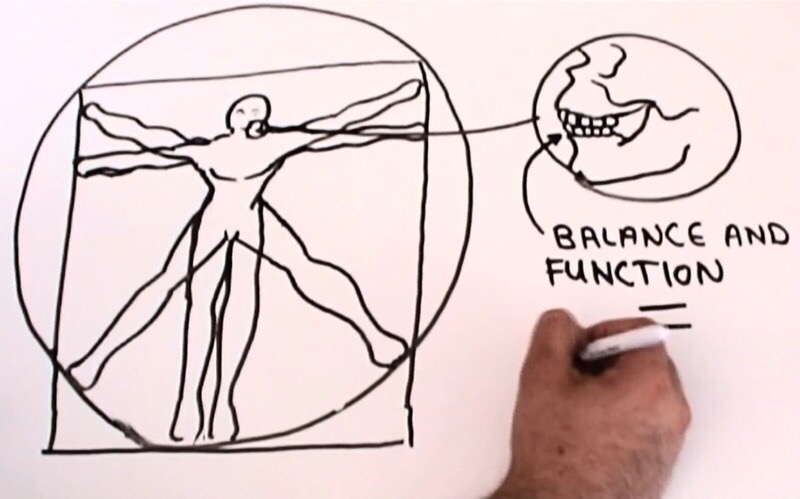
Our regular reader sent me a very interesting video that clearly demonstrates the development of TMD and its treatment. Therefore, I had the idea to make on its basis a kind of history of temporomandibular joint in pictures, which would help many to understand what is happening to them. Nevertheless, even in such a wonderful video, the treatment process is shown too simplified, therefore, to some of the pictures I made some inserts with explanations based on the opinions of world-class specialists who have real success in the treatment of TMD.
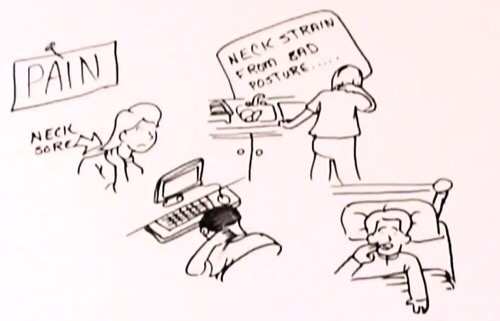
Pain. It is always localized somewhere. Headache, back pain, tight neck. When a person begins to suffer from pain, it has a huge impact on his life. When pain becomes chronic, it takes up a huge amount of energy for the body to function normally.
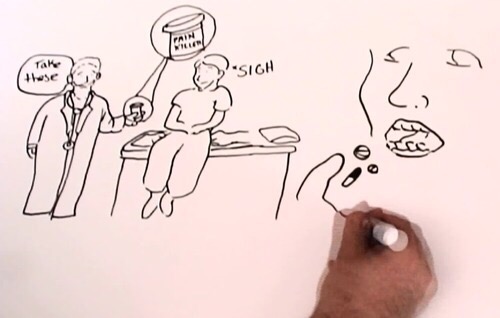
Many turn to a doctor for a solution to the problem, but the drugs they prescribe only mask the symptoms – here we are talking about painkillers and muscle relaxants. And that doesn’t solve the problem. The point is that this is not a medical problem, but a functional one. Therefore, in this case, a functional solution is needed.
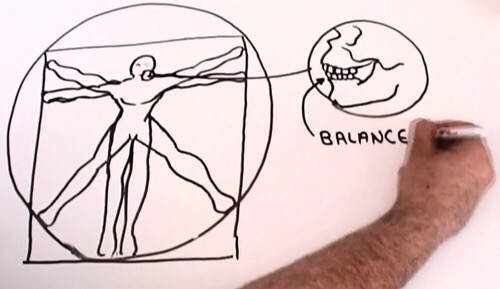
The body must be restored in a functional sense. What we need to know: The functioning of the body is highly dependent on how our teeth touch each other – that is, on our bite.
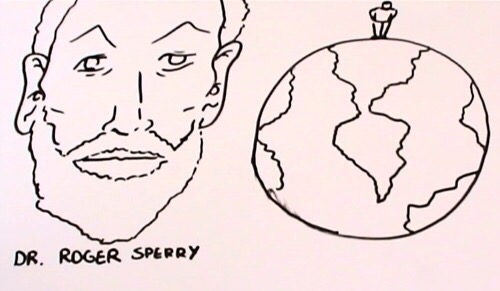
A huge amount of research has been done in this area. Dr. Roger Sperry, Nobel Prize winner for brain research, claims that about 90% of the brain’s energy is produced according to the state of the physical body, which is attuned to the Earth’s gravitational field. The more a person’s physical body is damaged, the more energy it needs to carry out the process of thinking, metabolism and recovery.
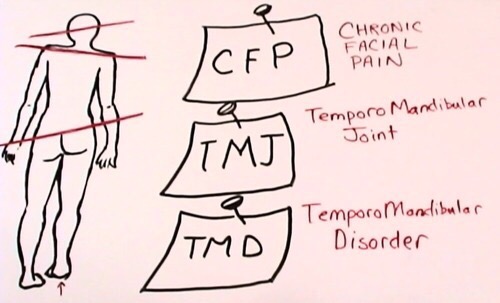
So, what happens to the human body when it is mechanically damaged? Different experts call this condition differently. Some people call it CFP – chronic facial pain. Others call it TMJ or TMD, temporomandibular joint dysfunction.
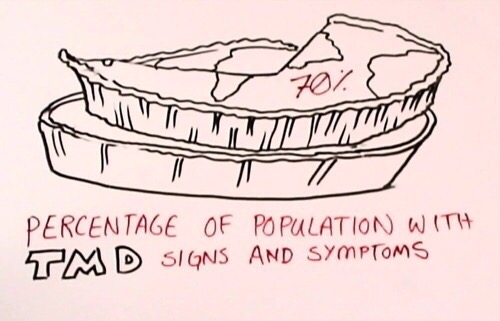
Conservative researchers say that TMD affects about 25% of the population. However, other doctors have a different opinion: if you take those who have all the symptoms of TMJ without severe pain, this will be about 70% of the total population of the Earth.
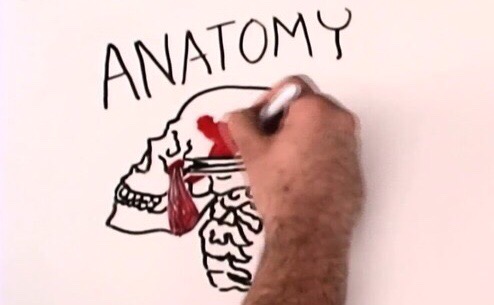
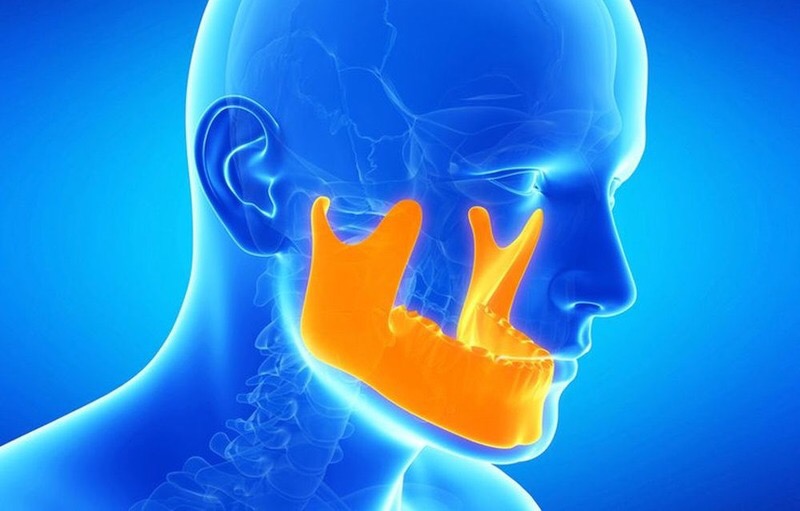
To understand what TMJ is, you need to know the anatomy. Let’s take a human body. The top of the body is crowned by the head, or skull. The lower jaw is held in it by the muscles. If you cut them off, the jaw will simply fall to the floor. The lower jaw connects to the skull at a point called the temporomandibular joint.
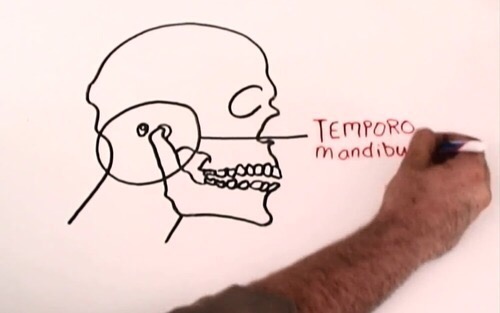
The temporomandibular joint moves the jaw not only up and down, but also back and forth, and from side to side. Also here we must pay attention to the point where the head connects to the neck.
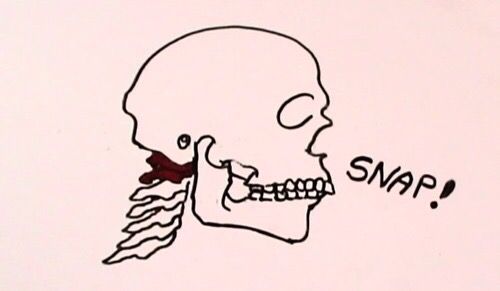
The structure of all seven cervical vertebrae is interconnected, and the position of the vertebrae depends to a large extent on how the lower jaw functions. All joints in the body can bend and unbend. But not the TMJ. Because when the upper and lower jaws touch, the temporomandibular joint stops moving. This is called dental occlusion.

Teeth touch many thousands of times a day – when we swallow, chew, drink, clench our jaws.
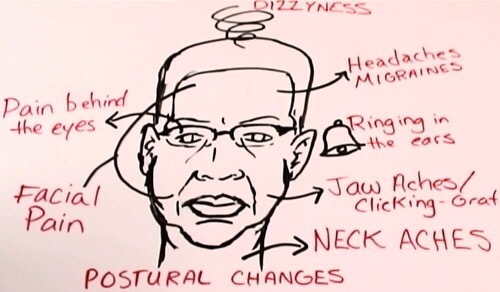
If your bite is out of balance, it has a huge impact on your entire body. We call this temporomandibular joint dysfunction. This condition causes headaches, migraines, neck tension, changes in posture, tinnitus, dizziness, clicking in the temporomandibular joint, pain behind the eyes, pain in the teeth and gums, jaw tension, facial pain, and even snoring or sleep apnea (cessation of breathing during sleep).
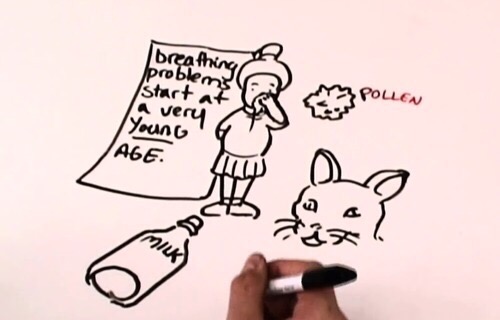
What causes TMJ? The most common cause is a violation of the normal breathing process in childhood (in addition to this, the reasons leading to the deterioration of facial development and the development of TMJ include the lack or lack of breastfeeding. British doctors John and Mike Mew investigated and proved this relationship, because during the sucking process breast, which is very difficult, there is a proper development of the mouth apparatus, facial muscles, the development of the correct position of the tongue and the development of an adult type of swallowing. On the contrary, this process does not occur properly when sucking a bottle or nipple, since the tongue in this case does not rest against the palate In addition, the skull of an infant can be deformed due to birth trauma. In studies of 1200 babies, the skull was deformed in 95% of them!)
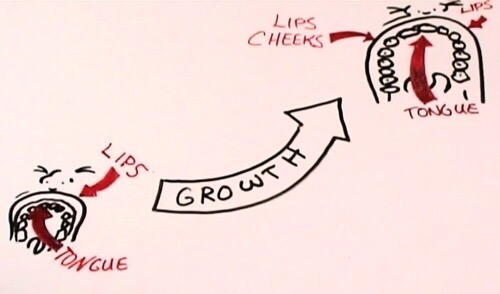
The temporomandibular joints develop between two powerful forces in the mouth. The tongue forms muscles by pushing the facial bone (maxilla, upper jaw) upward. And the muscles of the lips and cheeks press on the upper jaw from the outside. As it grows, this balance of muscle strength between the tongue, lips and cheeks creates a perfectly developed wide arch of the upper jaw that is present for all teeth. This is ideal.

But what happens in reality. More often than not, pollution and the types of products of modern society can cause allergies. This allergy blocks normal nasal breathing.

But we must all breathe. If we cannot breathe through our nose, we will breathe through our mouth. To do this, we have to move the mouth from the normal relaxed position, when the tip of the tongue is behind the front upper teeth on the palate, to the lower position, when the tip of the tongue is behind the lower teeth. This way you can breathe through your mouth.
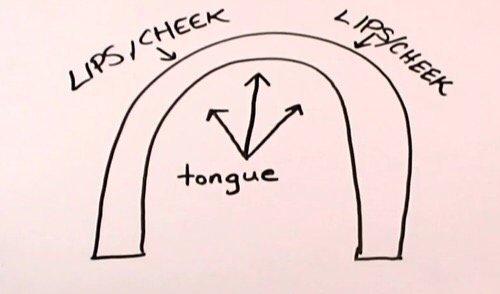
This very simple change has profound implications for the development of the face, jaws, temporomandibular joints, and teeth.
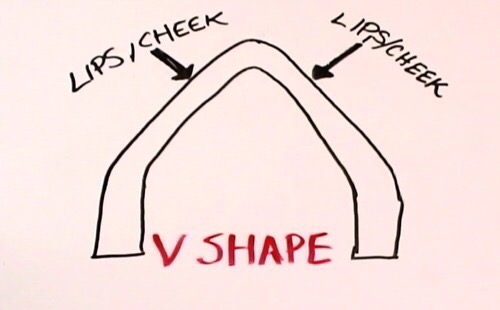
Those who breathe through the mouth, at least partially, develop a narrower V-shaped upper jaw. The teeth of the lower jaw should now adjust to the position of the upper jaw.
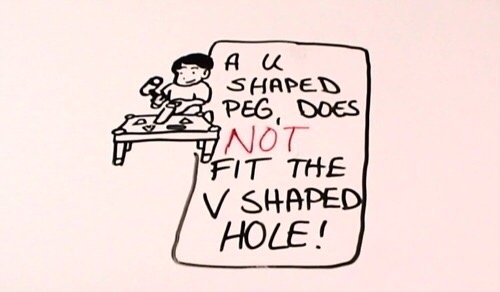
You all know the child’s game to find a shape for an object of a certain shape. And a U-shaped object can only fit into a U-shaped notch. A U-shaped object does not correspond to a V-shaped notch. The lower jaw remains in a U-shape, while the upper jaw is in a V. And they don’t close properly.
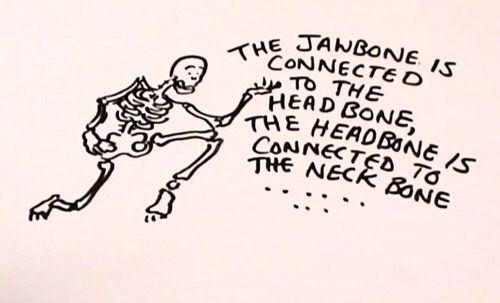
There is an American children’s song about bones: “The jaw bone is connected to the head bone, the head bone is connected to the neck bones,” and so on. This song is true – when the relationship between the upper and lower jaw is disturbed, it affects the whole body.
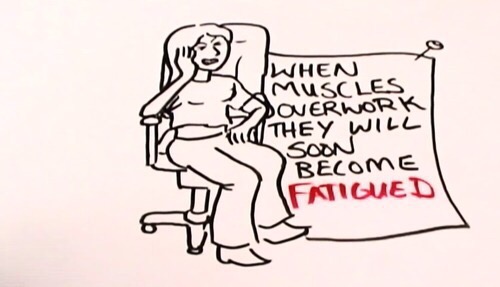
The first negative effect is on the jaw muscles. In order for the jaw to function properly, it is necessary for the teeth to close correctly. If a violation occurs in this mechanism, then the muscles are forced to be processed and tired. And then they will need support from other muscle groups.
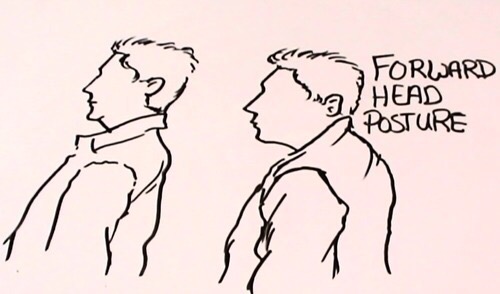
If this muscle group begins to overwork, then the position of the head relative to the neck is disturbed. Instead of an upright position, the head goes forward and the shoulders and pelvis are raised.

How can a TMJ specialist help in this case? To begin with, if the teeth do not close properly, the entire structure is displaced.
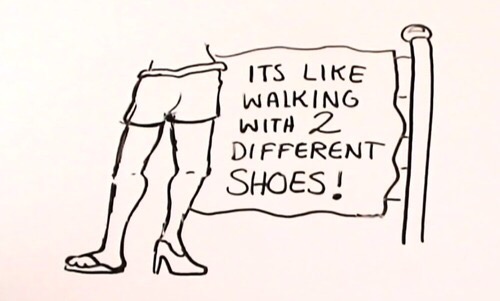
It’s like putting two different types of shoes on your feet. Imagine that one of your feet is in high heels and the other is on low heels, and go on like this all day.
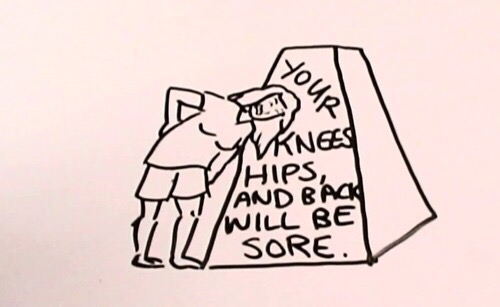
Your hips and back will ache. And the bite in this sense is even more sensitive to imbalance.
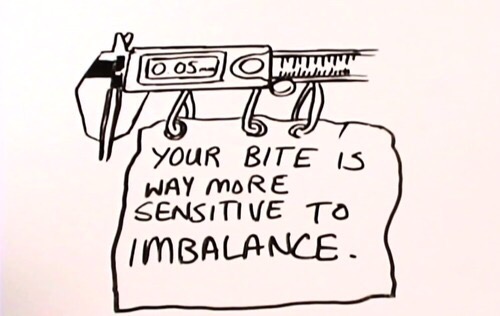
Fractions of millimeters can create imbalances in the muscles of the jaw and skull. But, if the specialist corrects this imbalance, the jaws will take their normal position. This will restore balance and support to the entire body. (An extremely important digression should be made here: it is important to find a competent craniodontist, since such specialists begin with setting the upper jaw in the optimal position, because if you compare the lower jaw with a door, then the upper one will be a door jamb for it. And no matter how you try to fit the door under the curved jamb, you will have little success until you align the jamb first. This is exactly what the orthocraniodotia approach differs from gnathology, which works only with the lower jaw on neuromuscular splints, which do not help in a huge number of cases, the confirmation of which is the whole Russian TMD famous reader discussion and the English-speaking TMD/TMJ discussion group. Also, as a basic treatment for TMD, you can pay attention to the innovative Italian splint Starecta. It has only a slight expansion effect on the upper jaw, however, it balances the skull in a different way doing an excellent job of supporting joints and aligning the occ luzionny plane with the cervical spine. It can be used in conjunction with myofunctional exercises (mewing) to expand the maxilla. In this archive, the two methods are presented as complementary rather than interchangeable).

How does a specialist solve a problem? It restores balance. Thus, he achieves relaxation of muscles that are in tension.
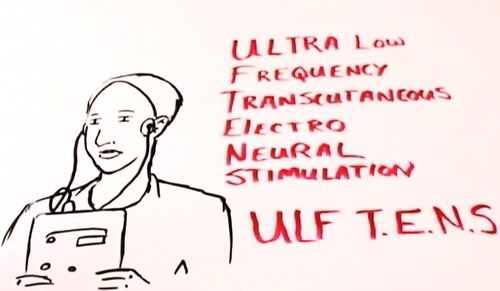
Some experts start by measuring muscle balance with the ULF T.E.N.S. This is a kind of electronic massage of the jaw and neck muscles (it is worth noting that for many world-class specialists this stage is completely optional!)
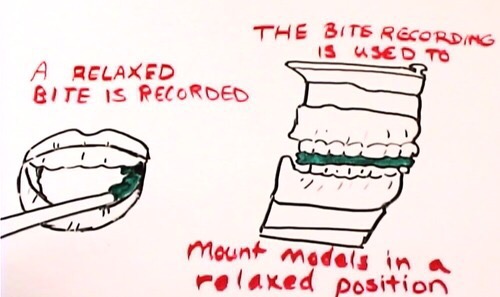
The specialist can calculate the relationship between the upper and lower jaw and make a special impression. (Gnathologists fix the bite, in their opinion, “in a healthy position, taking into account the neuromuscular anatomical features of the patient,” but we have already talked about the door and the door jamb, and the importance of starting work with the latter. In the Starecta method this problem is solved differently, but, nevertheless in an effective way).
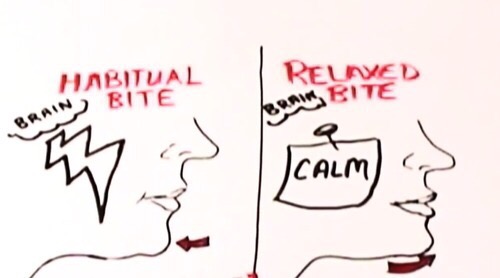
This new position provides support for the jaw and neck. The body reacts quickly and muscles relax. This process has a tremendous effect on a person’s well-being when muscle and nervous tension goes away.
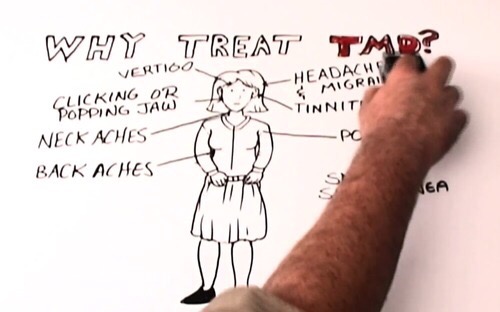
What is the benefit of the treatment of TMD? Headache goes away due to muscle tension, neck back pain. Clicking in the joint goes away. Tinnitus and dizziness go away. The height of the face is restored and the posture is improved. Even the problem of snoring is solved. This will help you sleep better and feel more energy. Therefore, harmony returns to your life!
5 comments
Ask a careful question or add useful context. New comments are reviewed before publication.