
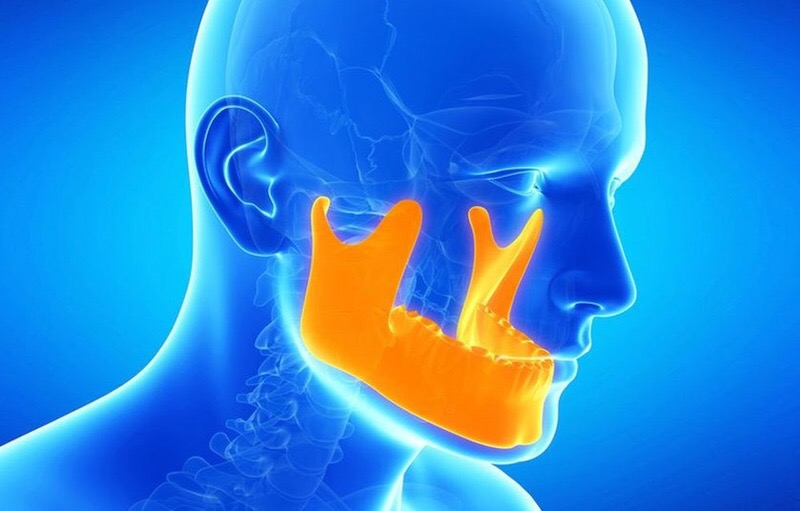
Many patients suffering from vegetative-vascular dystonia complain of tooth pain, although a dental examination finds that everything is fine. Or the dentist diagnoses caries in such a case, and several teeth are treated in the ‘dystonia sufferer’ over a short period. Interestingly, in many people, symptoms of vegetative-vascular dystonia appear precisely after dental intervention, especially after tooth extraction. Such patients are usually told that this is vegetative-vascular dystonia and their problem is psychosomatic. Whether that is so is what we will try to understand in this article.
Vegetative-vascular dystonia or teeth?

Tooth pain, often radiating into the face and mimicking trigeminal neuralgia, is officially considered one symptom of vegetative-vascular dystonia, a diagnosis widespread throughout the former USSR. Although there is no such diagnosis in the International Classification of Diseases, doctors attribute this tooth pain to disease of the central nervous system. In other words, for doctors, such a patient is a ‘pig in a poke’ whom they do not particularly want to deal with, so the patient is automatically assigned to the ranks of ‘dystonia sufferers’. Such patients are often prescribed sedatives and sent to a psychologist (who proves powerless in most such cases). Only a very rare, thoughtful doctor may advise a patient with these symptoms to have their temporomandibular joints checked. It is their ‘harmless’ dysfunction that can cause not only tooth pain but also masquerade as absolutely all the symptoms of vegetative-vascular dystonia.
The insidious TMJ

‘Simple’ temporomandibular joint dysfunction (TMD) can mislead even experienced neurologists, since it imitates the symptoms of many diseases and causes not only tooth pain but also facial pain, headaches, migraine, eye strain, photophobia, bruxism, sinusitis, scalp tenderness, ear pain and noise, tension in the jaw and chewing muscles, weakness of the tongue, difficulty swallowing, laryngitis, cough, tension in the neck and shoulders, and pain in the arms and even fingers! But that is not all. With TMJ dysfunction, a patient experiences dizziness and general unease, and may have depression or increased aggression, as well as sleep disturbances. Why does this happen?
The point is that 92% of the vital nerve plexuses, including the trigeminal nerve, pass through the region of the temporal bone, immediately beside which lies the mobile temporomandibular joint. Displacement of the TMJ's intra-articular disc constantly irritates these nerve branches, leading to disturbances in the functioning of the central nervous system and, consequently, affecting the patient's emotional state. Important arteries also pass through the region of the temporomandibular joints; compression of them impairs cerebral circulation, with consequences such as dizziness and changes in the psyche. Furthermore, ‘simple’ TMD can cause derealisation and depersonalisation, as a result of which the person may develop agoraphobia and social phobia. In this case, doctors stubbornly refuse to investigate the problem and prescribe psychotropic drugs. Yet the causes of the symptoms are one hundred per cent organic and can be cured!
How TMD develops

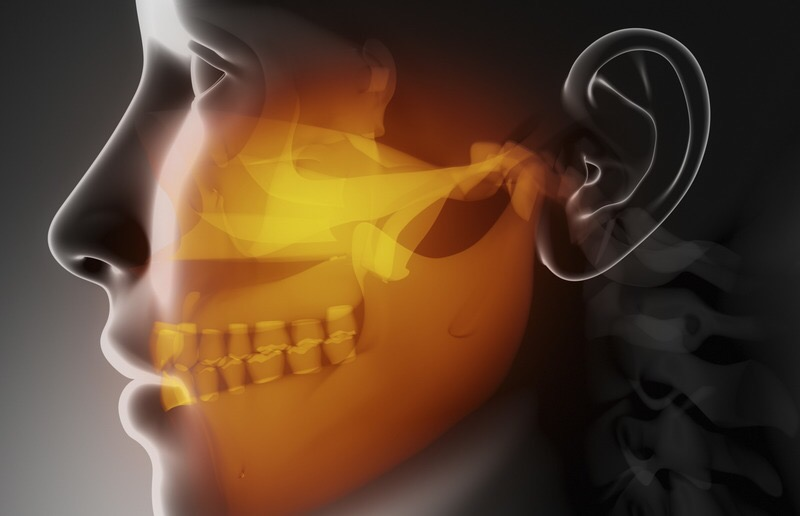
As a rule, in most patients, displacement of the temporomandibular joints results from birth injury. It is no coincidence that almost all TMD patients are found to have so-called lateral strain, in which the front section of the skull shifts to one side and the rear section to the opposite side (in the photograph above). In some, this injury originates from an unfavourable prenatal presentation in the womb. Many patients also develop TMJ dysfunction as a result of poor-quality dental intervention: fillings, crowns or bridges that are too high or too low, poor-quality orthodontic work involving braces, and often tooth extraction, especially of the ‘eights’, or so-called wisdom teeth.
The point is that these teeth are important in supporting bite height, and in many people the jaw shifts when they are extracted. It is precisely after extraction of the ‘eights’ that many people rapidly develop symptoms of vegetative-vascular dystonia, which are actually undiagnosed temporomandibular joint dysfunction. To establish the correct diagnosis, such a patient needs TMJ zonography, cephalometric X-rays in the lateral, frontal and submentovertex views, and CT or MRI of these joints. Orthocraniodontists treat TMJ dysfunction. Despite the length of treatment, which takes about two years, patients of competent orthocraniodontists demonstrate relief from all the symptoms of vegetative-vascular dystonia, which doctors had previously, and mistakenly, presented to them as an immutable truth.
TMJ dysfunction: a chameleon disease — here.
Vegetative-vascular dystonia: a mythical disease, or the biomechanical causes of symptoms — here.
__________________

22 comments
Ask a careful question or add useful context. New comments are reviewed before publication.