
This archived article discusses ideas from cranial osteopathy and related dental approaches. It is not medical or dental advice. A change in bite, facial pain, headaches, sleep symptoms, hearing symptoms or neurological symptoms requires assessment by an appropriately qualified clinician; do not attempt to alter tooth contact, a dental appliance or the jaw on the basis of this page.
The original article was written as a forceful introduction to “cranial biomechanics.” It argued that the skull should not be treated as a rigid structure and that dentistry needs to consider the head, neck, jaw and whole body together. Those questions are still interesting, but the source makes several much larger claims than the evidence can support. This updated archive separates the intellectual history from the promises.
What the historical model proposed
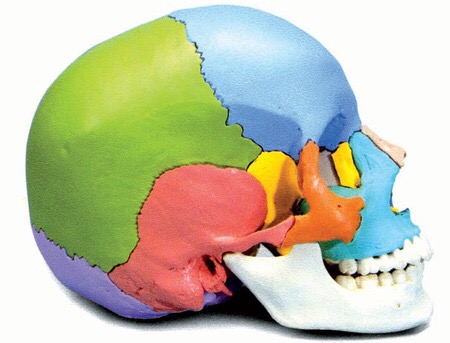
Early practitioners of cranial osteopathy, including William G. Sutherland, described a subtle rhythmic motion in the skull and a wider connection between cranial structures, the membranes around the central nervous system and the sacrum. In that tradition, a practitioner seeks patterns of tension or restricted motion through gentle palpation. Later writers brought these ideas into discussions of occlusion, the temporomandibular joints and facial development.
The source article uses this model to argue that dental work should be planned within a broad structural context. At its most modest, that is a call for good clinical history-taking: dentists should know about a patient's symptoms, function, prior treatment and goals, and different clinicians should communicate when a case is complex.
Where the evidence boundary sits
The wider claims need a much higher standard. A feeling of a “cranial rhythm,” a description of a pattern or a change that follows hands-on treatment does not by itself demonstrate a reliable diagnosis or cause-and-effect mechanism. Systematic reviews of cranial-osteopathic and craniosacral approaches have found that the reliability of the proposed diagnostic methods and the evidence for specific clinical effects remain uncertain or insufficient.
That does not mean a person’s pain, jaw symptoms or experience of care is unreal. It means that a practitioner should not promise that cranial treatment, an appliance or a change in bite will treat migraine, sleep apnea, neurological conditions, hearing symptoms or whole-body posture. Those conditions need evidence-based assessment on their own terms.
The bite, the jaw and treatment decisions
The source repeatedly describes the bite as a driver of the entire cranial system. The relationship between the teeth, jaw joints, muscles and head posture is complex, but complexity is not proof of a single corrective pathway. Dental decisions such as orthodontics, restorations, splints or retainers should be made from a proper examination, diagnosis, discussion of alternatives and an understanding of the likely benefits and risks for that individual.
In particular, a reader should be wary of absolute language: that a conventional treatment always harms, that an appliance is needed before any other care, or that one intervention will resolve a broad list of symptoms. Good care makes room for uncertainty, second opinions and coordination between the appropriate disciplines when that is genuinely indicated.
Why preserve an article like this?
The original piece captures a real dissatisfaction that many people feel when a symptom seems to be reduced to one small area. A whole-person conversation can be valuable: it can include dental history, stress, sleep, movement, prior injury, medication, nutrition and the emotional impact of persistent discomfort. That conversation, however, should add to careful diagnosis rather than replace it.
For that reason, this page remains in the archive as a record of a particular osteopathic-dental framework. Read it as a set of historical questions about integration in care, not as a clinical protocol or a reason to postpone established treatment.


No comments
Ask a careful question or add useful context. New comments are reviewed before publication.
No comments yet. You can start the discussion.