
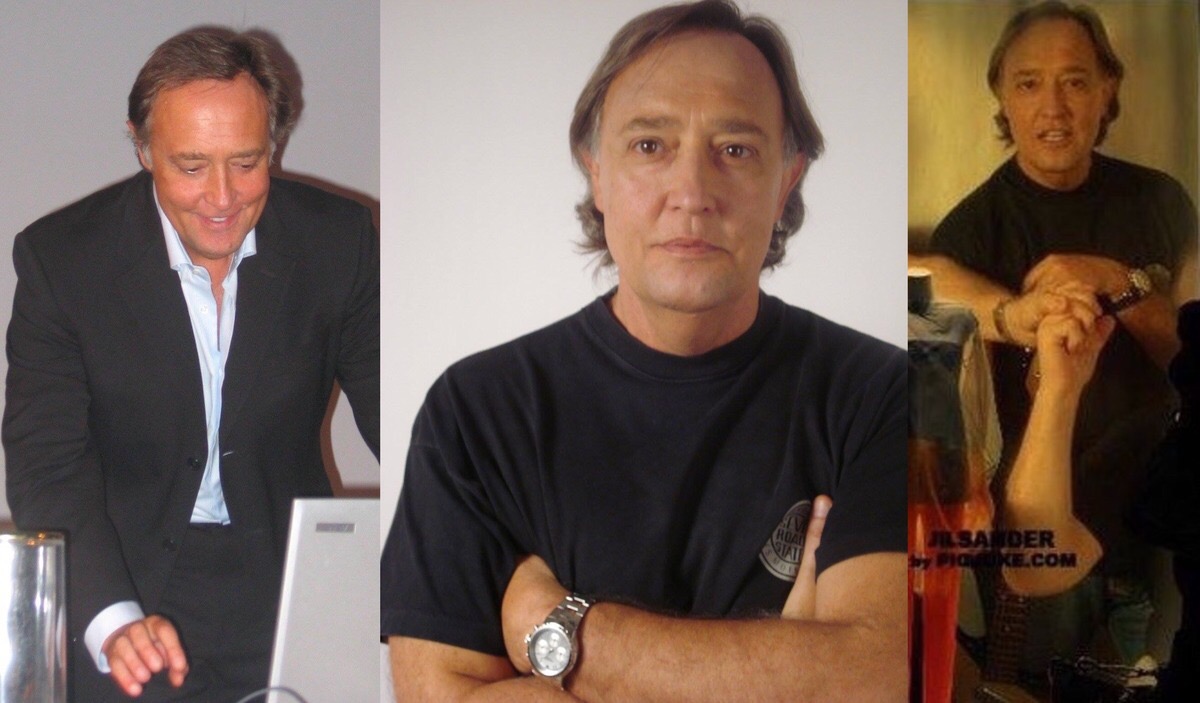
It is practically impossible not to love him. He is deeply human, profound and complex. Italian Professor Stefanelli’s working style is unique. In his work, he applies not only orthodontic knowledge but also his knowledge of posturology, chiropractic, osteopathy, acupuncture, homeopathy, functional medicine and other holistic disciplines, which allows him to focus on the patient rather than the pathology. Professor Stefanelli will tell us about all this, as well as his philosophy of life and his hobbies, in an exclusive interview conducted especially for our readers.
— Dr Stefanelli, many years ago, a colleague who regularly attended your course suggested that you devote more time to promoting what you do, write books and teach at universities; otherwise, you might remain forever ‘someone who dances with wolves’. As I understand it, he meant the main character of the film Dances with Wolves. How does it feel to be in that role?
I was a pioneer in my field, and about thirty years ago it certainly was not easy. I was accused of witchcraft and shamanism, but today many people talk about systemic orthognathodontics—that is, evaluating the mouth and occlusion in relation to overall posture. So now I no longer dance with wolves alone: there are many of us, and our number keeps growing.

— I managed to discover secretly that someone at one of the Italian ministries could not understand what your profession was: surgery, orthodontics or something else. With your unmistakable temperament, you even called him an idiot. How often have you encountered this kind of lack of understanding from institutions?
Very frequently. I am a physician, surgeon, orthodontist and gnathologist, and I work on occlusal-postural correlations. Unfortunately, I often find myself clashing with the old dogmas of academic orthodontics.
— Your career began with studying surgery at the University of Milan, where you graduated in 1978. What prompted your choice of specialisation then? Do you come from a family of doctors?
Actually, my first ambition was to become a thoracic surgeon, but I was already married with a daughter. I had to choose between five years of surgical specialisation and beginning work straight away to earn my living, and dentistry was more remunerative. No one in my family was a doctor: they produced good wine, and they did not support me on my path.
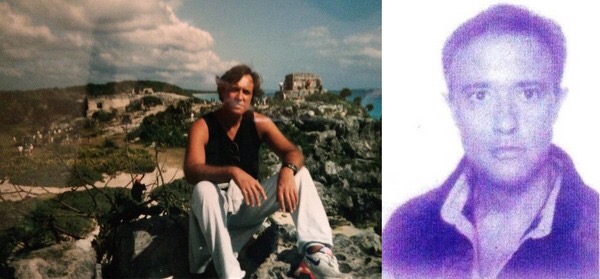
— In one interview, you mentioned that your perception of life changed after meeting the great Harold Gelb. Could you tell us more about that meeting? What struck you so much at the time?
I met Harold Gelb in 1984 and was very struck by the way he tested gnathological splints using applied kinesiology. I actually thought, ‘I will NEVER DO WHAT THIS MADMAN DOES.’ Yet soon afterwards I enrolled at AIKA, the Italian Academy of Applied Kinesiology, and my adventure began there.
— So after obtaining a master’s degree, you remained there as a teacher and subsequently held the position of deputy dean for almost eight years, starting in 1998, until the Academy closed. Why was it closed?
At that time, there were claims for postural damage following dental damage which insurers did not cover. Moreover, chiropractors could not practise unless covered by a medical director. It was a nuisance, and we were summoned to the medical association in Rome, where we held courses and lectures. When they realised that such damage could occur, they imposed AIKA’s closure. Unfortunately, the Academy shut its doors because it was considered ‘inconvenient’ to the medical and dental powers of the time.
— During that period, you met Jean Pierre Meersseman and have remained friends ever since. What did that collaboration bring you?
A great contribution to my knowledge of chiropractic and osteopathy. We have been friends for thirty years, and I esteem him enormously. He was fundamental to my personal growth. Even today, we refer patients to one another precisely because we speak the same professional language.

— Tell us a little about your relationship with the American Orthodontic Society.
I have no contact with the American orthodontic society, partly because very poor orthodontics is practised in America, based on purely aesthetic concepts that are the opposite of my working principles. In 2007, I gave a lecture at BioResearch in Milwaukee, then at Tufts University in Boston in 2010, where educational material was taken from me. Since then, I have ended my relations with America.
— When did you first meet John Mew?
In Rome, at a congress of the myofunctional therapy society. I can say he is a great man with whom I share many orthodontic concepts.

— Since you work specifically with the ALF system, I must ask about Darick Nordstrom. Do you know each other? How did you begin working with the ALF appliance?
We never met except through the professional courses of James Strocholm, which I attended in Birmingham. It was there that I learned the ALF method, fell in love with it and have practised it constantly ever since. The ALF system is concerned with mobilising the cranial bones before the teeth, and the cranial pattern or engram takes absolute priority. In particular, by working skilfully on the device, we can first modify and mobilise the premaxilla and palatal sutures, which are an expression of the cranial base, thereby modifying the base itself.
— I have read many comments from your colleagues who attended your course. They felt lost and could not find their way out of the room because what they heard ‘blew their minds’: you discuss occlusion in the overall context of the whole body, going into details of the immune system and neurons… Any comments?
It is very difficult and complicated. Many return to attend again, since university training is sometimes not enough, and they need to study neurology, immunology and so on. For a conventional dentist, this sometimes means picking up medical books again: they must study some skeletal and muscular anatomy, but also neurology.

— Conventional dentists rarely examine a patient’s neck. You, however, conduct a whole series of unusual investigations—for example, into the relationship between occlusion and protrusion of the first cervical disc, Kimmerle’s anomaly, Chiari malformation and compression of the lumbar artery. You even recorded, for the first time ever, a case of its decompression after craniodontic therapy. Despite all the results obtained as a ‘bonus’ to the prescribed therapy, you receive no additional financial reward. Would it not be simpler to fit braces at a much higher price? Or is your passion for your work really so great? Do you never feel like giving it all up? Is the burden not too heavy?
My work is rewarding. Every patient is different and shows their gratitude. True orthodontic treatment must take everything into account, including posture. Perhaps it is the conventional practitioners who ought to lower the price of their therapy. I have rarely felt like giving up, but never for these reasons. In any case, I would never return to general dentistry, because that would mean ignoring what I know.
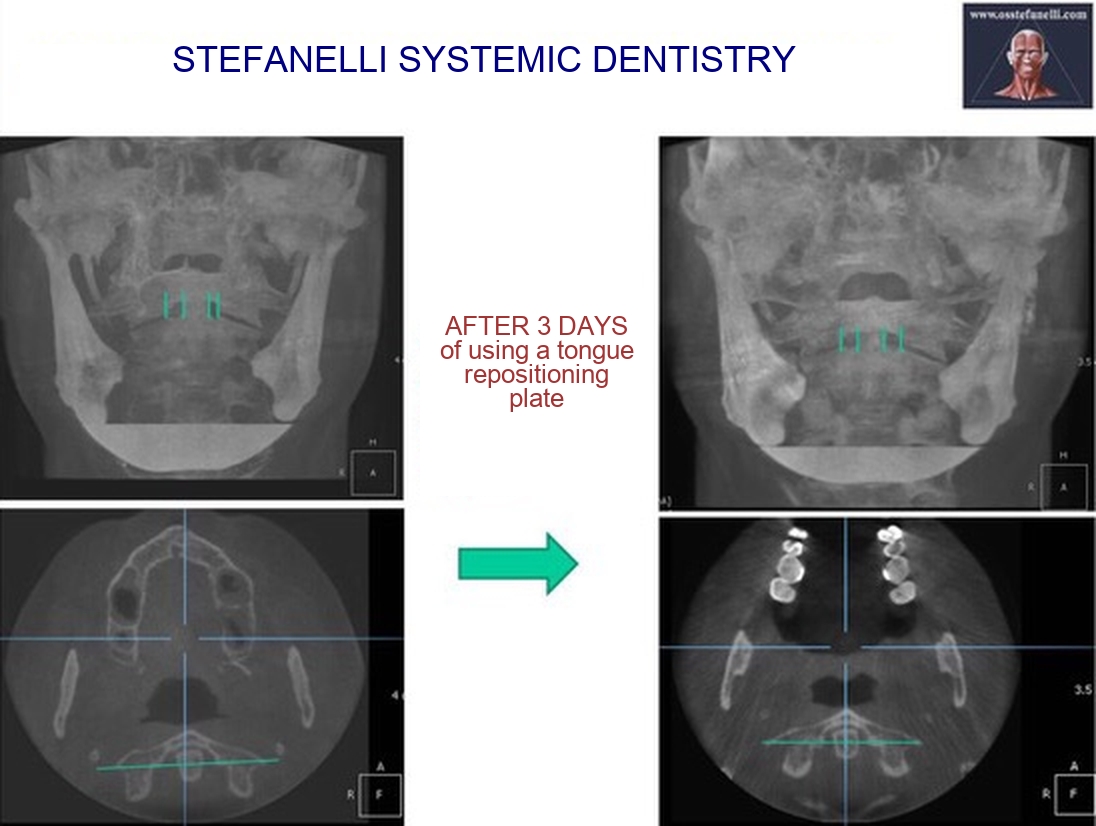
— Many young professionals become disappointed in craniodontics and cannot withstand the pressure: therapy is lengthy, a prognosis cannot be made, patients often fail to understand the steps, and study takes a great deal of time. In your opinion, what is needed to become a good craniodontist?
A great deal of study, patience, a desire to learn, a willingness to question yourself, and the curiosity to discover the reasons behind what is taught.
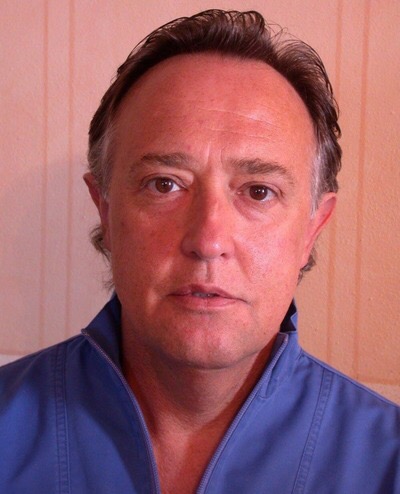
— A subject most craniodontists are reluctant to discuss is the experience of a patient undergoing therapy with the ALF system. In one of your articles, you wrote that occlusion must also be viewed in the context of biochemistry and the psyche. It is no secret that during treatment of complex cases of temporomandibular joint dysfunction, many patients complain of psychological changes. Would you kindly comment on this ‘uncomfortable aspect’ to discuss?
The psychological aspect is equally important, but not relevant to the treatment itself. Sometimes the patient develops an actual psychosis caused by unsuccessful therapies, repeated attempts with different professionals, or unsuitable treatments that lead the patient to focus on their symptoms. We need greater empathy with these patients, but the treatment is the same for them too.
— Tell us about the most complicated case in your practice.
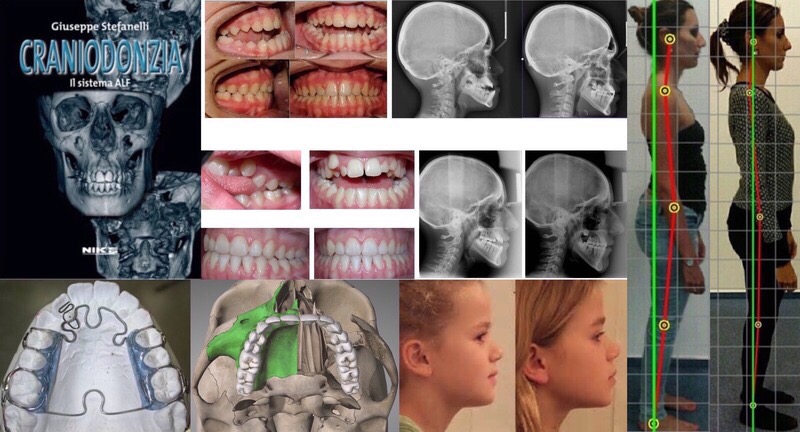
The most complicated one is not my own clinical case. It concerns a girl followed through photographs from the age of six to twenty. She had a simple crossbite at the first permanent molars, which according to conventional clinical practice almost never causes problems in occlusal development and was, in any case, treatable with an ordinary standard ALF. Yet this girl underwent rapid palatal expansion, extraction of four premolars and, finally, combined maxillary and mandibular surgery as well as septoplasty. At twenty, when she came to me with her previous medical records, she had bilateral TMD and could not breathe through her nose. It is the first case I show my students to make them aware of what should never be done in orthodontics. As for my own complicated cases, we have avoided orthognathic surgery in many patients using the ALF technique and Sadao Sato’s MEAW technique.
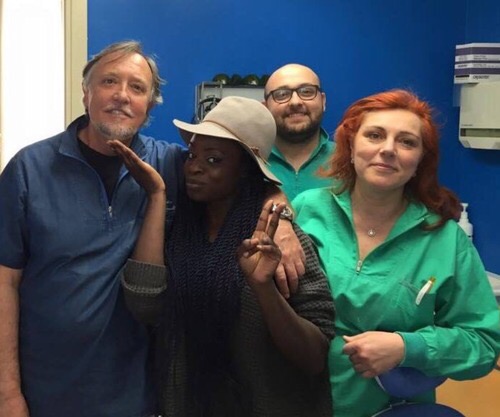
— Your clinic stands out for its homelike comfort. Who took care of creating this atmosphere? When did your ‘lady’ appear in your office—the red-haired lioness, administrator Elena?
We have always tried to create a warm, family-like environment unlike the supermarket clinics of various profit-making organisations. Here, we practise medicine and dentistry with the patient’s well-being first. As for my secretary Elena, she has been with me for twenty-nine years and is a cornerstone of the practice: she maintains relations with all the patients with class, elegance and empathy, as well as assisting and administering the practice.
— On forums, there are comments describing you as extremely strict but humane. One woman even dedicated a poem to you after treatment. Here is an interpretation of it: ‘Doctor, I never want to see you again! I was not alone on this couch!’ How important are a sense of humour during therapy and an emotional connection between doctor and patient to you?
Very important, because establishing a calm, empathetic relationship with every patient is fundamental. Besides good background music, my practice has images of animals and landscapes running on screens—all things I love that make my patients feel good.
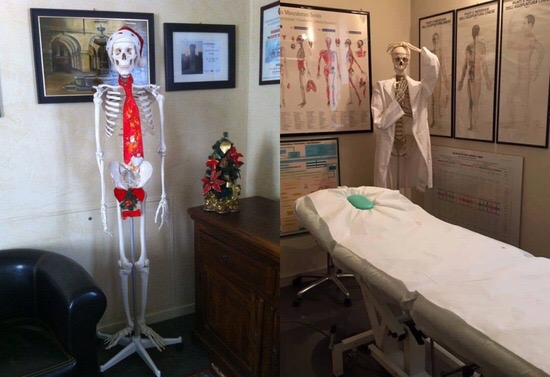
— I noticed another member of your team who strongly resembles Yorick in Hamlet. He not only watches all your clinic’s visitors attentively but also assists during your course. What is his real name?
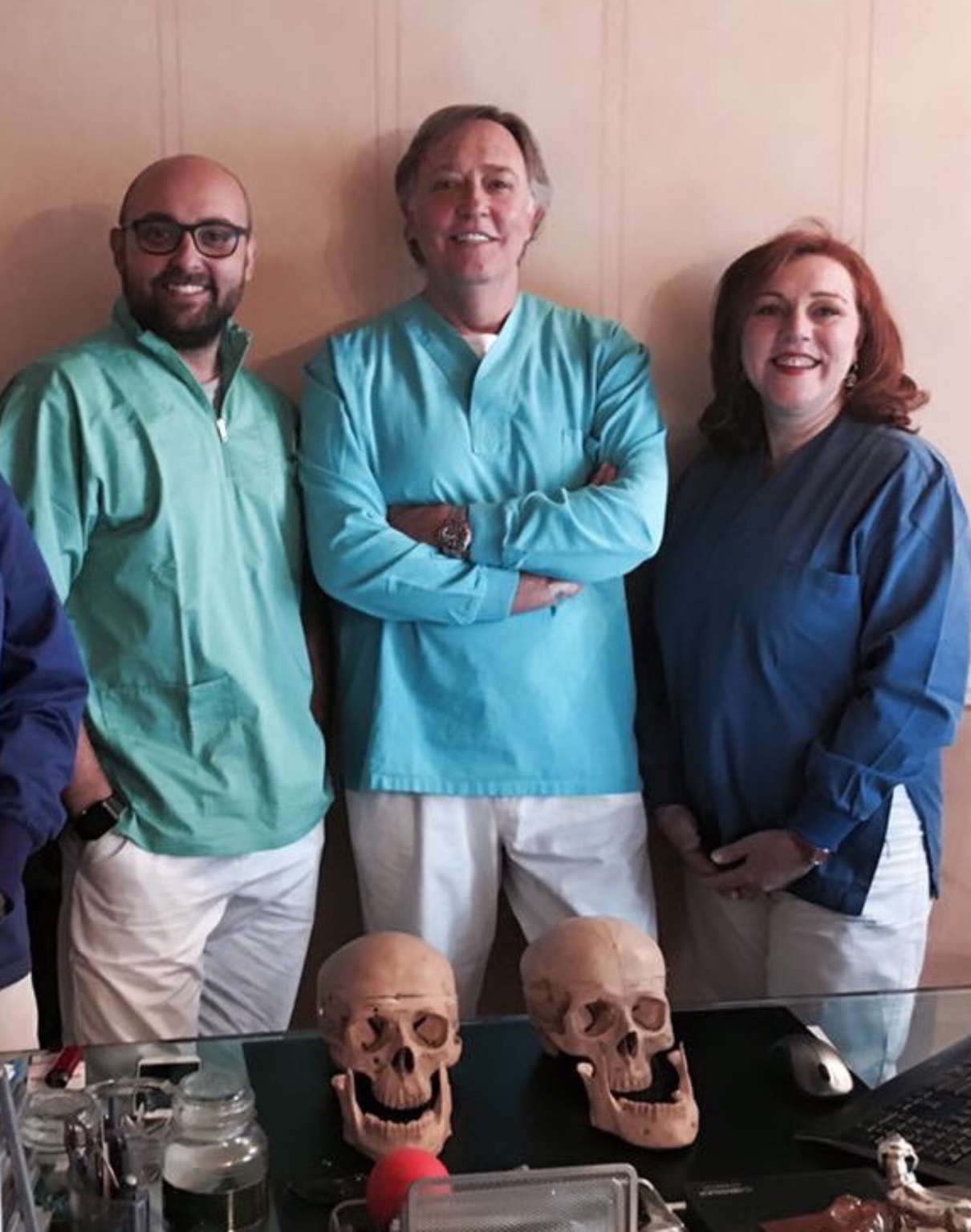
His name is Willy. He has always been in my office along with other bones, skulls and spinal columns, as part of my university and postgraduate studies. As the years passed, we began decorating Willy for Christmas or Halloween, and sometimes we put a hand on his head as if he were tired and desperate from too much work. It is rather dark humour, but the patients like it a lot too: they photograph him and take selfies. It is also a way of lightening the seriousness a practice must have.
— Who else belongs to your team but is invisible to patients? I ask because the device you invented combining orthodontics and gnathology is called STEVI, a name derived from your surnames, Stefanelli–Viglioli.
My technician, Massimo Viglioli, is not only a great technician but has been a friend for twenty-five years. Together with him, besides all the orthodontic devices, I have developed the STEVI appliances, a variant of the ALF system invented by me and made by Massimo. We are very proud of the work we have done together over these years. Massimo also participates in my courses, giving presentations on the technical part. Having a good technician is a fundamental part of our secret staff.
— Until recently, you taught at the University of Genoa. What course did you lead there?
It was a master’s programme in posturology and clinical orthognathodontics: a comprehensive programme with many colleagues from other disciplines, including orthoptists, speech therapists and so on, all in relation to posture. It was successful, but it has now been suspended because of insufficient publicity. We will see in the coming years.
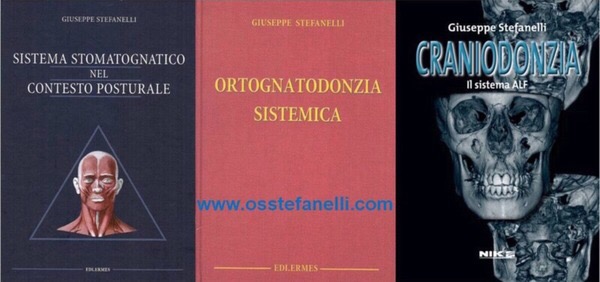
— You have published five books, two jointly with another author, and the book Craniodontics: The ALF System, which currently has no equivalent in the world. It describes how to prepare the system for certain cranial deformities and the effectiveness of such therapy from head to toe. How long did it take you to collect the material for this book?
I wrote The ALF System in a year, but it also contains the practical knowledge of a lifetime’s work. I wrote the books to give my colleagues guidelines, a reference in the field of orthocraniodontics. After two books on theory, The ALF System is the practice that can be applied in one’s own office.
— Every chapter of this book is preceded by a philosophical thought. Which is your favourite?
I think it is not very philosophical, but my general thought about life, applied above all to my profession, is ‘Do not do to others what you would not want done to you.’ It is simple but of great value, because I teach and treat my patients with devices and techniques I would use on my children and myself. Sometimes it is easy for a doctor to detach from the human side because it makes their work easier. But having been a patient myself, I can have a more human, sensitive touch toward the patient in my chair.
— Your son Alberto works with you and helps during lectures and courses. You share a passion for singing and guitar, and have even performed together on stage. Have I understood correctly that he is not only a son to you, but also a companion and friend?
Since graduating, my son has thrown himself headfirst into the world I built. I believe a passion for music and engines, and dedication to the family inside and outside our practice, are teachings I passed to him unintentionally. I am happy that he is there to carry forward what I began so many years ago with the same dedication and curiosity I had.
— The guitar, your love of riding a bike: what else interesting should readers of this interview know about your life?
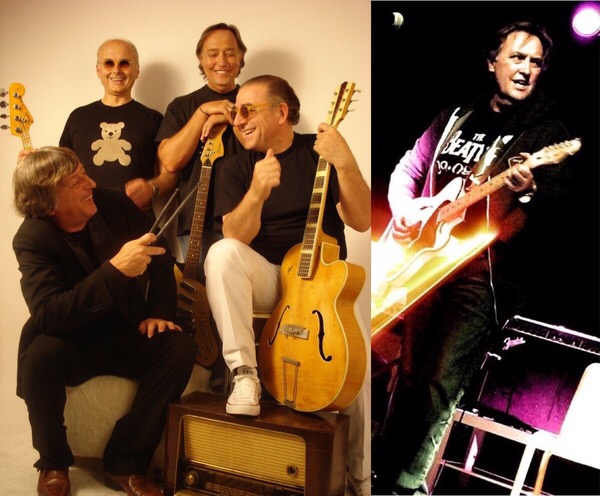
I have had many passions in my life, but I believe my love for music was the most important. After all, some of my studies were paid for through poorly paid gigs in the 1970s. I had a band in which I played guitar, and I have never stopped playing it. At some recent concerts, I even wore a T-shirt saying, ‘I am a guitarist by profession and a dentist as a hobby.’ I would say that gives an idea of how much I loved playing and music.
— You made your professional choice thirteen years ago. If you could go back in time, would you want to change anything?
No, I would change nothing. Professionally, I believe I made all the right choices. My patients are happy and grateful, which I think is the best feedback for understanding whether you have done a good job. As you know, patients come to my practice from all over Italy, and some from elsewhere in Europe, usually after long medical pilgrimages to various specialists. When we manage to stop this endless pilgrimage, my entire staff is happy and knows we have done a good job.
— Dr Stefanelli, thank you for this interview. In closing, I would like to ask you to offer a few words of good wishes to young craniodontists, dentists, osteopaths, posturologists, orthopaedists and other professionals.
Thank you. The advice I feel I can give my colleagues and specialists in every branch is never to stop studying, to be curious and always ask questions. Do not marry yourself to a single philosophy merely because universities or the market impose it. The answers are out there: you only need to search, and have the desire and commitment not to be frightened by difficulties or by what is considered impossible.
Website http://www.osstefanelli.com, Facebook page.
English version of the interview
Russian version of the interview
____________________

8 comments
Ask a careful question or add useful context. New comments are reviewed before publication.