

Modern orthodontics does not stand still: every year brings new methods that can correct even the most complex malocclusions. But the field of orthocraniodontics that has emerged in our country is a genuine revolution in dental medicine, because its results go far beyond simply obtaining an attractive smile. We will explore what the new method can do and why it has developed so rapidly in this article.
What is orthocraniodontics?

Orthocraniodontics is a new interdisciplinary approach in dentistry that arose at the intersection of orthodontics, osteopathy, manual medicine, orthopaedics and a whole range of other medical fields. Their area of intersection in this scientific discipline is the head, face and neck. Orthocraniodontics is based on the postulate that the skull is not a monolithic system with only a mobile lower jaw, but comprises mobile cranial structures that can be brought into balance without surgery.
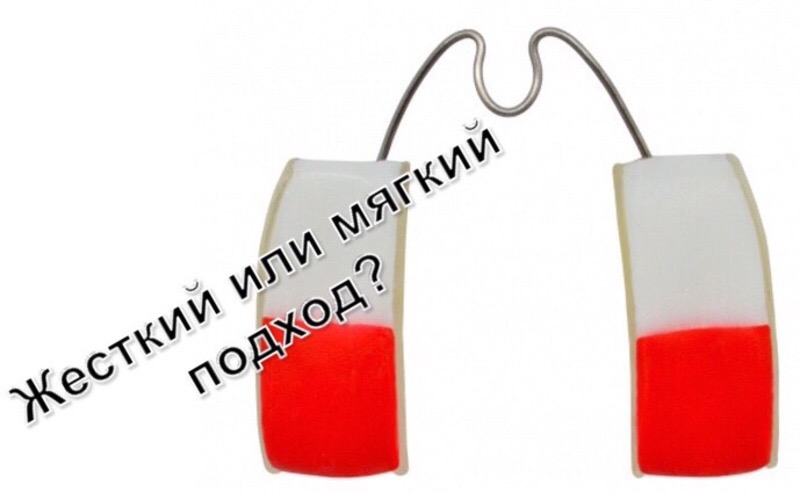
This is achieved using the special orthodontic ALF appliance, which changes the position of the upper jaw and the facial and cranial bones, together with special appliances for repositioning the lower jaw and particular osteopathic techniques. This is the fundamental difference between orthocraniodontics and other dental approaches, where all problems are tackled only at the level of the mandibular complex. The founder of orthocraniodontics in our country, Dr A. O. Savinov, is convinced that understanding cranial biomechanics, together with the use of specially designed orthodontic appliances, represents a profoundly exciting and innovative development in orthodontics. We will now look at why.
A relationship unexpected by conventional science

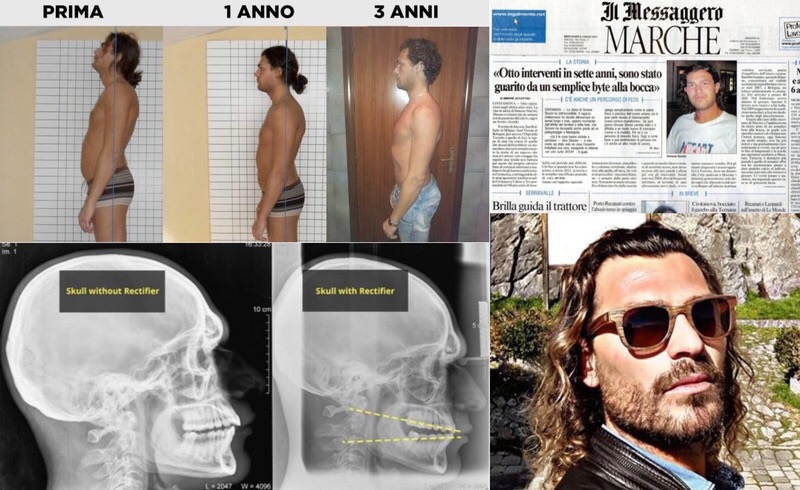
Many dentists will find it surprising that the structural position of the jaws and temporomandibular joints, and the bite, affect not only all the bones of the skull but also the cervical vertebrae and the entire spine (more about the mechanism here). General dentists and orthodontists usually do not recognise or attach importance to the fact that the slightest changes in the bite and jaw position can, in the long term, adversely affect the whole body—from the bony structures of the skull and neck to changes in the lower spine, arms and legs. In A. O. Savinov's view, dentistry cannot be isolated from general medicine and its specialist fields; whether we acknowledge it or not, even a minor dental intervention can affect a person's physiological and psychological status. This is an enormous responsibility for the doctor, which must not be underestimated.
A huge number of patients suffer from headaches, migraines, neuralgia, and pain in the face, neck and back. Yet, consulting doctors of all kinds of specialities to no avail, they rarely associate their complaints with their teeth. Often, however, a dentist is precisely the specialist who can help them. The symptoms listed above frequently occur with malocclusion caused by congenital or acquired abnormalities in the structure of the skull and jaws; they may also result from inadequate dental or orthodontic work or poor prosthetic treatment. Orthocraniodontics is based on a diagnostic and treatment algorithm that allows the cranial bones, upper–lower jaw joints, muscles and dental arches to return during treatment to their optimal physiological state, in which the symptoms disappear 'by themselves'. Savinov believes it is extremely important to introduce the new concept into orthodontics, since millions of adolescents currently receive orthodontic treatment without an understanding of its effect on the whole body.
The basic treatment algorithm

Osteopaths identify cranial deformations primarily through palpation. For a prosthodontist and an orthodontist, this can be done by studying special X-rays of the patient, as well as models of the patient's jaw mounted in an articulator. This diagnostic algorithm makes it possible to develop a treatment approach encompassing the following tasks:
1. Correct cranial injuries as far as possible, then correct the position of the upper jaw and upper dental arch relative to the skull.
2. Correct the position of the lower jaw relative to the upper jaw.
For many patients, the most effective approach will be a combination of cranial balancing by an osteopath and the gentle forces of the ALF orthodontic appliance.
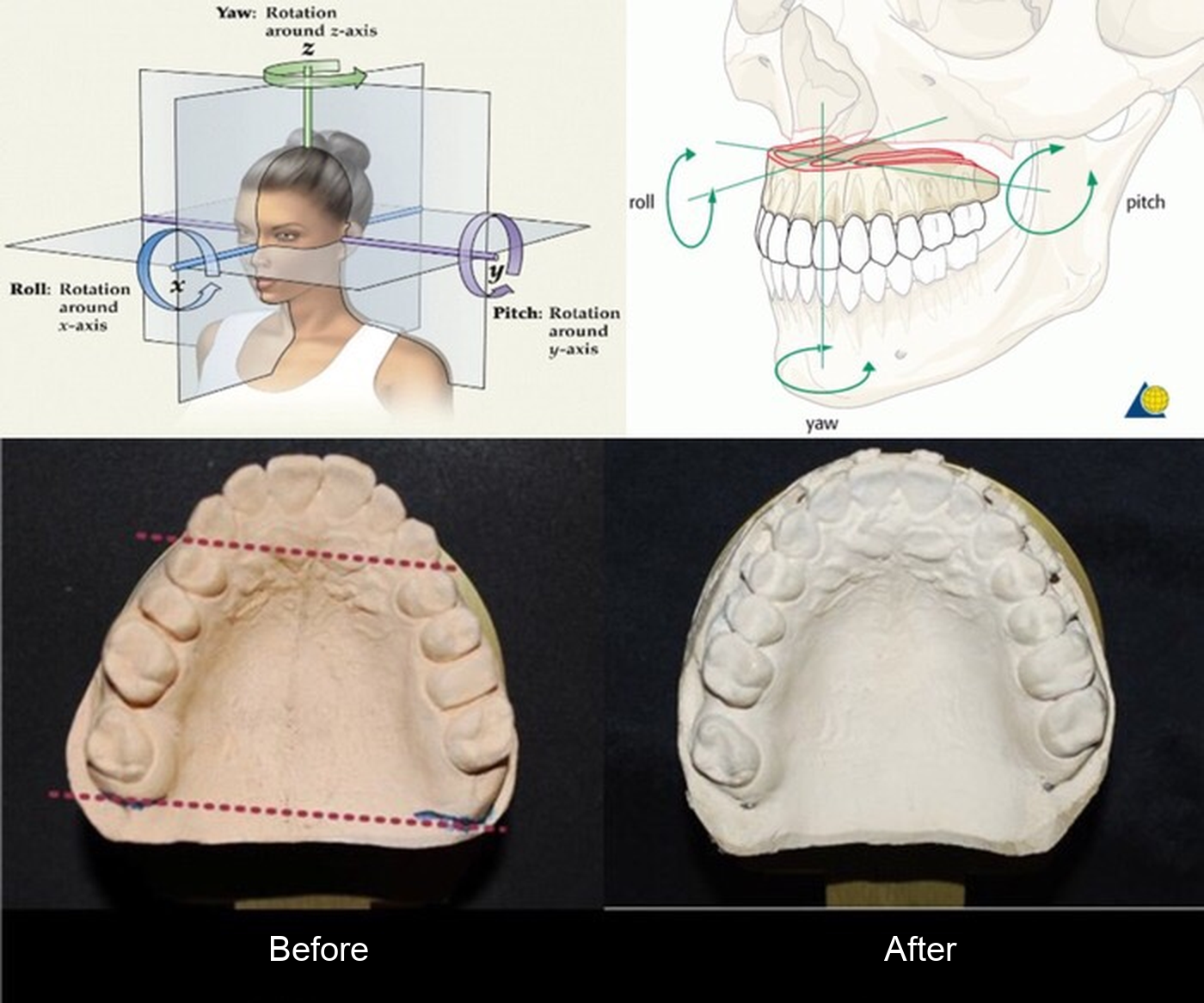
Treatment should consist of three phases:
I—TMJ and neuromuscular stabilisation
II—Cranial orthopaedic balance
III—Complete occlusal integration
************
These phases can be broken down into 10 steps:
I.
1. Stabilise the TMJ
2. Establish the appropriate posterior vertical component of occlusion
3. Establish the appropriate lower-jaw position
_______________
II.
4. Balance Eyes—Roll—'Cranially'
5. Balance Eyes—Yaw—'Cranially'
6. Establish upper-jaw position—'Cranially'
7. Develop the shape of the upper jaw and dental arch—'Cranially'
_______________
III
8. Establish correct tooth positions
9. Model tooth shape and the final vertical dimension of occlusion (VDO)
10. Establish the final occlusal relationships and functional movements of the lower jaw (occlusal balancing).
It is possible to proceed directly to phase III, which uses braces, only if the patient is 'asymptomatic' with regard to the TMJ, with no visible cranial or skeletal disturbances. Ignoring this requirement leads to serious consequences for the body, described in this article. The whole question is how many such 'asymptomatic' patients come to an orthodontist. Understanding all these mechanisms of cranial biomechanics points towards a distant prospect whose importance is difficult to overestimate: orthocraniodontic techniques that influence cranial movement can achieve corrections of facial structures to a degree currently considered almost impossible.

Orthocraniodontics: specialists in Russia and Ukraine—here.
________________
The opening illustration uses photographs from http://forum.stom.ru (work by A. O. Savinov); the article uses materials by A. O. Savinov from orthocranio.ru and http://forum.stom.ru.
5 comments
Ask a careful question or add useful context. New comments are reviewed before publication.