
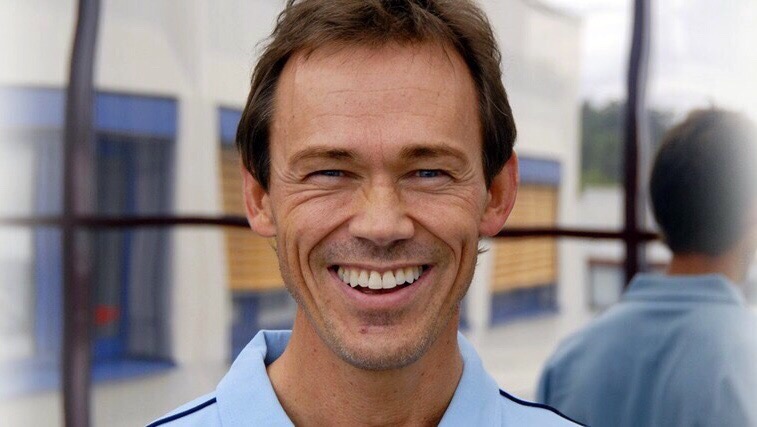
This amazing man, without a trace of ego, is one of the best specialists in TMD treatment in northern Europe and works near Oslo. What is distinctive about the Norwegian character, how the use of the ALF appliance and traditional braces is developing, what people undergoing TMD treatment should be prepared for, what duende means, and what stereotypes Norwegians have about our country — Dr Geir talks about all this in an exclusive interview for our blog.
— Dr Geir, because of your love of all the latest inventions, some of your patients on the internet call you ‘Mr Gadget’. It is funny, of course, but how right are they?
Mr Gadget — I have never heard that. In fact, they are very mistaken, because when it comes to TMD treatment, it is important to understand what lies behind it. It is easy to focus on the tools, but it is even more important to see healing as a process. This means that the philosophy of the ALF appliance, myofunctional exercises to correct tongue and lip posture, and a good osteopath to support the process are an extremely important part of treatment, but the patient is even more important. It requires very strong motivation from the patient to achieve the desired final result, so this treatment is not for everyone. The ‘gadgets’ provide support and help the patient achieve proper function, sufficient space in the mouth and healthy functioning of the temporomandibular joints. But I have seen patients who healed just by doing myofunctional exercises. Another important aspect that increases the effectiveness of treatment is nutrition and psychological qualities.
— We joke that ‘if you add warmth to a meticulous German or teach etiquette to a Russian Siberian, you get a Norwegian’, whose character can be summed up in two words as ‘stern kindness’. Is that you?
I love Russians and the fact that you have jokes about us. I think the Siberian with etiquette would be the most accurate. Bear in mind that we have always been on the periphery of world events, and we have never had a feudal society. So, to generalise, the Norwegian character is paradoxically sociable, as in all tribal communities, and at the same time extremely self-confident and free. My paternal grandmother grew up in a tiny hut on the northern coast. Her parents and the cyclones were the only inhabitants there. In the old days, there were many families who would rather live in extremely difficult conditions but preserve their freedom than be enslaved by a landowner.

— All right, let's move on to more serious things. You began your career as a dentist more than thirty years ago (1984). What were you doing at that time? (I mean your specialisation.)
I have never had an official specialisation. I started working as a general dentist in private practice. General practice means that you work on what interests you and what you feel competent in.
— As far as I know, applying what you had learned at dental school, you extracted several of your child's teeth for braces. Can you talk about this story?
Yes, I extracted four canines from my son. He went to a well-known and competent orthodontist (competent within his paradigm). At that time I was not confident enough to listen to the feeling deep in my ‘gut’ telling me not to do it.
— How did you discover the ALF appliance, who did you study with, and how did your passion for TMD treatment develop in the first place?
My son's treatment ended in disaster, and he developed temporomandibular joint dysfunction. This opened my eyes to what had happened, and I began looking for information and eventually took a series of training courses with Skip Truitt. Through him I came into contact with a research group in Ireland, and it was thanks to my Irish friends that I met Darick Nordstrom, who developed the concept of the ALF appliance. In a sense, my work with TMD became an act of atonement for me. I was lucky enough to spend almost two weeks with Brendan Stack in Washington. This inspires my colleagues, but first and foremost it is an immense joy to witness how your patients' lives change. And that feeds my passion for this treatment.

— Why do you think ALF orthodontics is currently more developed in America, while Europe is noticeably behind in this respect?
In America, the mentors I named have students. It is a huge country with enormous resources. But braces-based orthodontics came from America, and in fact it still remains the dominant treatment model there.
— As far as I know, many European countries do not allocate funds to researching and promoting light-wire intraoral devices, and despite their proven effectiveness and amazing results, many talented doctors single-handedly oppose the system of braces-based orthodontics. It looks like a conspiracy. What do you think about this whole situation?
I agree that it looks like a conspiracy, and in a sense it is true, because traditional orthodontics is more profitable than a holistic approach. Norway has a public healthcare system that covers a significant proportion of orthodontic costs and is structurally ‘set in concrete’ regarding how dentists are reimbursed. I think the old paradigm will disappear in a few years because patients are becoming more aware and informed.
— How did the Tannami clinic come about?
Tannami was something I had to do. Previously, I was part of the dental system, and it was not my own child; I had mixed feelings about the corporate model. One reason I prefer to study dentistry is the opportunity to pursue independent, free work with considerable responsibility and autonomy. By then I had already developed a passion for TMJ treatment. So, to be true to myself, I needed to create Tannami. Literally, the name means ‘My tooth’. Every Norwegian knows Torbjørn Egners' story ‘Karius Og Baktus’. In this story, a boy has toothache and complains to his mother that his Tannami hurts.

— Do you think a doctor who has TMJ problems himself understands his patients better and therefore treats them better?
Definitely, yes. It makes him even more involved, dedicated and determined. But I do not think it is a prerequisite for good treatment.
— You have some rather interesting friends, for example the Finnish former Olympic champion Risto Hurme, a well-known TMD specialist in Texas. Where did you meet him?
Somehow colleagues who are interested in TMD treatment turn out to be fantastic people. So meeting such people at courses and seminars is very enjoyable and touching. I first met Risto at the annual AAGO conference. He is very kind, warm and very passionate about TMD treatment.
— I saw on Facebook that the ALF appliance's developer, Darick Nordstrom, and the well-known American doctor Jeffrey Brown visited you at the end of last year. What was the purpose of their visit, and what were your overall impressions?
They held a seminar at my clinic. My aim was to attract as many dentists as possible who were interested in their treatment philosophy. But unfortunately, such things are still slow going. We had two days of presentations and patient consultations. Although it was great, I will not do it again because I suffered a substantial financial loss. It is good that Darick, Angela Tenholder and others have organised fantastic online education and an ALF community where you can learn without travelling far.

— On the clinic's website, I found information that you use NLP techniques in treatment. How does this work, and what does it give patients?
I took NLP courses thirty years ago because I thought it would help patients with dental phobias. To give you an example of how it helps patients suffering from TMD, I will tell you about a woman who had suffered from this dysfunction for many years. She had an accident in which she sustained a whiplash injury to her neck. She was a bus driver in Oslo, and the impact came from behind. We worked out that every time she went into town and saw a bus, her pain increased. It seemed that what she saw triggered the original reaction, as if the body lived in an eternal now and could not unravel the trauma. In just one NLP session, she stopped reacting to the appearance of buses, but not only that: her overall condition also improved instantly. This shows that, despite obvious physical problems, it is important to work from different points of influence.
— How long does TMD treatment last on average? What difficulties can patients face during such treatment?
TMD treatment takes place in several stages. Stage one: supporting the joints with a particular type of splint and myofunctional therapy. But no longer than 12 months. If you have not achieved this within 12 months and the disc in the joint has not been restored, you will have to compromise and live with it. Some doctors restore the disc surgically, as Brendan Stack did. I have seen magnificent results from that approach, but it is too risky, so I decided not to take that path. When we talk about an ALF appliance for the upper jaw, it can be made in many different designs, but a simple one with three omega loops is usually used. It mainly affects tongue posture by ensuring its proper position and also gives the body feedback on where it occupies a midline position, helping achieve better posture. The ALF is placed on the upper jaw at the same time as the patient receives a splint on the lower jaw.
Once the first stage is completed and the lower jaw is in the correct position, you need to establish a new occlusion to match this position, which takes about two years. The difficulties the patient faces in this process include sometimes experiencing pain, as if their entire history were coming back to life in reverse order. The patient has to eat with the splint. Many like the splint when it removes pain, but find it difficult when they feel well. Thus, the patient may feel like Sisyphus, who had to start pushing the stone up the hill every time it rolled down (the disc that has returned to its place will become displaced again if you do not wear the splint).
— I am very grateful that you recommended I read the book by the Starecta method's founder, Moreno Conte, about the effect of dental occlusion on the entire human body. You have already told me your opinion of this method, but could you share it with my blog's readers too?
The Statecta method was developed by a patient who treated himself and is consistent with the ALF philosophy. The method consists of empowering the patient so that they can understand the process and take responsibility for their own healing. Of course, when you are ill and suffering, you would like to find someone you can trust who can take care of you. The more severely you suffer, the truer this is. Nevertheless, it is important to encourage the patient to find support within themselves as well.
— You said that, sitting in your office, you sometimes travel because patients from different countries visit you. Which countries, for example? Can you tell us about the patients who have stayed most vividly in your memory?
They say life is a journey, and if you are someone who meets people, it is even more interesting than seeing the sights. If you meet people as I do with my patients, it is as though you are travelling. They share their stories with me. Most of my patients are from Sweden and Norway, but I have had patients from Finland, Denmark, France and England. But since people from everywhere now live everywhere, there are people in Norway whose families are, for example, in Pakistan. I do not want to say too much about my patients, but I remember one lovely Finnish woman who came from an island between Finland and Sweden, so the first time she had to travel a very long way because there was a storm: by train and bus, then by plane. She had TMD, was about forty, and had three children. We managed to relieve her pain and restore joint function with ALF, and still needed to align her teeth for aesthetics and increased stability. But she was so happy that she could now function normally that she decided not to straighten her teeth. She continues to wear the ALF for stability and is very happy with it. A beautiful, carefree woman, completely relaxed about her appearance.

— As far as I know, Spain is a great passion of yours. What attracts you so much there?
My wife and I are fortunate enough to have an apartment on the Costa del Sol. We go there every holiday. She speaks Spanish fluently; I still have a long way to go. Obviously, the climate and simple way of life are the main attractions of this place. It is also very easy to get there from Oslo, with several direct flights each day. We wake up in Oslo in the morning and eight hours later we are having lunch in our apartment. In January, Oslo is dark and cold, while in Málaga you feel as if it is summer. The mountains are excellent for hiking, and the Mediterranean is magnificent for watersports enthusiasts. The place is also full of friendly, down-to-earth people.
Spain's music and poetry are intriguing. Juan Ramon Jimenez is my favourite poet, along with the Norwegian poet Olav H Hauge. The strongest emotions I have ever experienced during a musical performance were in Seville at a flamenco concert. That was when I discovered what is called duende in Spanish. The only time I experienced anything similar was at a George Benson concert in Croatia, in a small, cosy venue for a small audience. In a lecture in Buenos Aires in 1933, the Spanish poet García Lorca explained that duende refers to the fiery spirit that makes a magnificent performance full of emotion. So duende is a power, not a work. It is a struggle, not intellectualising. I heard an old guitar maestro say: ‘Duende is not in the throat; duende rises inside you from the soles of your feet.’ The meaning of this is that it is not about your abilities, but about a truly living style, blood, the most ancient culture, spontaneous creation... everything that has this dark echo within it possesses duende. Duende has a beautiful meaning for me and is something that especially attracts me when I think of southern Spain. Incidentally, there are many Russians there, and they speak Spanish quite well.

— You said that you would like to visit Russia, especially St Petersburg. I wonder what stereotypes you have about our country?
I used to be influenced by stereotypes from the sixties and seventies. You were unrivalled at ice hockey, and there were also the grim stories of the Gulag Archipelago, which made people a little afraid of you. Today I think you are more like us Norwegians. I suppose the main difference may be that you respect authority and money more. I do not know this for certain, but here is what my son told me. A friend of his went to Russia with other businesspeople on business. He noticed that Norwegian speakers did not attract much attention from the Russians. He also noticed that Russian speakers had a completely different presentation style: much more confident and louder. So on the last day, when his ‘moment of glory’ came, he decided to put on a performance. He pretended to be super-confident and super-macho (it was not difficult for him because he is like that, but in Norwegian culture you have to soften those character traits). In the end, the Russians loved him, and everyone's ‘ears’ were his.
For your readers, I want to say that I have always been interested in learning about your country because we are neighbours, and I have been interested in your history and literature. When I finished secondary school, I wrote on Dostoevsky. Also, my favourite commentator and analyst of current news is a blogger who lives in Florida with his American wife but is a Swiss citizen. His father is Dutch and his mother is Russian. One of my favourite patients is also a former Russian cardiologist. At eighty, she came to Norway because of love. She had worked all her life in a large hospital and has a holistic approach to everything. She is the daughter of a Soviet army general and once told me, since she knows a lot about politics, that people are better off living in small political communities with considerable autonomy than in such superstructures as the USA or the USSR. I just want to tell you that many people do not believe in the demonisation of Russia we see in the media.
— Would you say that everything in your life has gone smoothly? And what helped you get through difficult periods?
I am an emotional and sensitive person, and I have often felt that life is harsh. But if you were born a man in Scandinavia after the Second World War, had good health and a stable job, how hard can your life be? I am very privileged, but sometimes I think the sum of suffering in different societies is constant: as soon as some problems disappear, we humans immediately start worrying about something else.
What sustains me is love, also in a spiritual sense. Basic trust consists in accepting life as it is while at the same time striving to make it better.
— Can you say that all your dreams have come true, or is there still something left?
I have never been too ambitious. If I have dreams, they are more about learning more, loving more and finding peace within.
— Thank you, Dr Geir, for a very interesting interview. Finally, I would like to ask you to say a few words to my blog's readers who are currently suffering from TMD...
If you have TMD, start doing myofunctional therapy. You can find many useful videos on YouTube. Read Moreno Conte's book (Starecta). Do your own research. There are dental specialists, osteopaths and myofunctional exercises that can help you.
Update, 6 October 2019: with all my immense respect for Dr Olsen, I cannot help providing a link to the blog of one of his patients, who is not very satisfied with the treatment he received. Yes, there are many positive reviews on forums, but I believe it is important to acquaint yourself with the widest possible range of information before making an important treatment decision. And it is my duty to provide that information objectively.
Tannami clinic website: www.tannami.no.
English version of the interview.
______________________
Photographs provided by Geir Olsen from his personal archive.
4 comments
Ask a careful question or add useful context. New comments are reviewed before publication.