
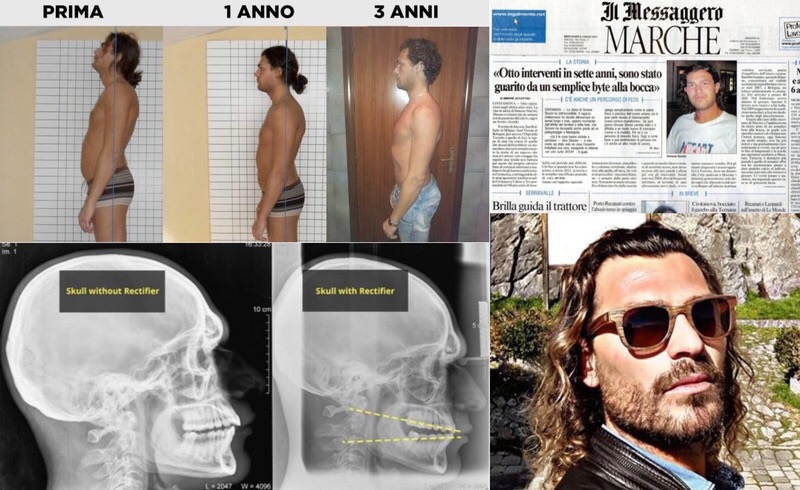
This recent article by Starecta founder Moreno Conte from starecta.com has been translated into Russian at the request of one of our regular readers in the VKontakte group. It turns out there are quite a few people with the same or a similar story to mine, and it matters to me, and gives me pleasure, that this blog helps you understand what is happening to you and choose a treatment method acceptable to you. So I am happy to fulfil our reader's request — feedback matters to me, I myself follow all Starecta news with interest, and I also hope this information helps those only planning to use this method for treatment.

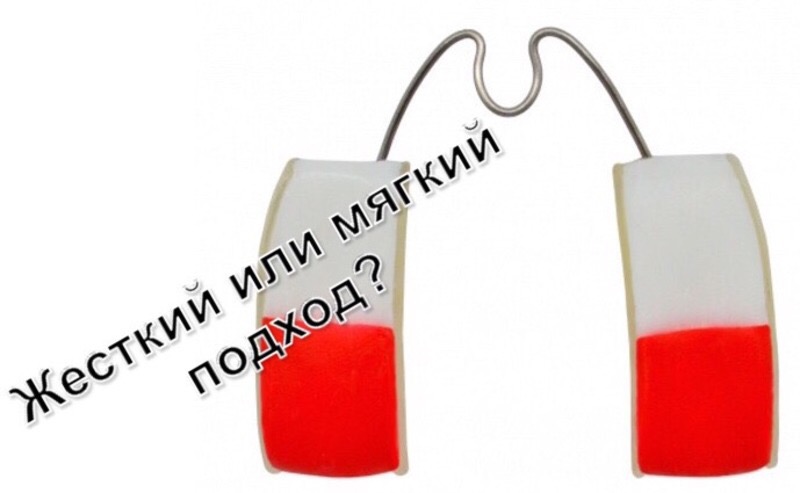
There are an enormous number of splints and dental guards used with varying success to address many problems: night-time bruxism, breathing problems, guards that help with back pain and stress, sports guards, splints that improve posture, and so on. But the only splint capable of resolving all these problems is the Starecta Rectifier, because it is designed to activate the so-called ‘molar lever’ at the back of the jaw, raising the skull into an ideal position and stretching the spine. In addition, the Rectifier helps achieve facial symmetry by creating a symmetrical occlusal signal. This splint can be used with the hard approach (wearing it constantly), or, as needed, the soft approach (wearing it for a few hours a day). In this article, we will try to understand what these are and how the two approaches differ.
Rectifier: what it is and how it works — here.

Before exploring what the Rectifier is, how it works and the difference between its two possible approaches (hard and soft), it is very important to read the scientific article below. It examines in detail how the Rectifier unconventionally eliminates many health problems by completely balancing the human body's structure. The article has been published in many well-known scientific journals, and reading it will help you understand why the Rectifier is not an empty promise incapable of delivering what it claims (like the Power Balance device and many other strange gadgets promising phantom improvements in posture, strength and symmetry).
From this article, you will also understand why the Rectifier is genuinely effective in achieving neuromuscular body symmetry and bringing the spine into proper condition. Here is the link:
http://www.opastonline.com/wp-content/uploads/2018/04/conception-of-human-body-biomechanical-balance-metacognitive-diversity-interdisciplinary-approach.pdf
(Information about Starecta and how it works has appeared repeatedly in this blog, so you can learn its details in the ‘Treatment methods’ section; a translation of this article will appear here soon too.)

Secondly, it is important to understand the extent of today's scientific confusion about the causes of spinal deformities. It is also important to understand why most existing splints and guards do not work to improve posture. The scientific community is fundamentally divided about the causes of spinal curvature (scoliosis, kyphosis and lordosis) and accompanying symptoms of back and neck pain. Although studies exist denying a connection between craniomandibular (skull–jaw) dysfunction and posture, many scientific studies emphasise the importance of the relationship between the stomatognathic system, posture and facial symmetry (see ‘The Relationship Between the Stomatognathic System and Body Posture’, Antonino Cuccia and Carola Caradonna, Clinics (Sao Paulo). 2009 Jan; 64(1): 61–66; ‘The association between head and cervical posture and temporomandibular disorders: A systematic review’, Olivo, Bravo, Magee, Thie, Major, Flores-Mir, J Orofac Pain. 2006 Winter; 20(1):9–23).
As these studies show, the position of a person's spine and facial symmetry depend on their dental system (or craniocervical mandibular apparatus). In fact, these studies show a strict correlation between the skull, lower jaw and spine. More precisely, the human body's structure is determined by the condition of the spine, which in turn is strictly linked to the ‘oral’ system (the craniocervical mandibular apparatus, or skull–jaw system in its relationship with the cervical spine). This system consists of three main elements: the skull, lower jaw and spine.
To resolve problems in the relationship between these elements, the scientific community has proposed many alternatives. Generally, these can be grouped into two large categories of splints and dental guards: 1) splints in this group are made of hard material, are thin and have a smooth surface; they are usually used to treat dysfunctions of the craniocervical mandibular system (the skull–jaw system connected to the cervical spine) (for example, TMJ dysfunction — translator's note). Being thin, these splints create only a small distance between the upper and lower teeth. This category includes smooth-surfaced Gelb splints and many guards made by gnathologists and dentists; 2) this category includes splints with chewing grooves and cusps on their surfaces, creating greater height between the upper and lower dental arches; they are usually made of rubber and other soft materials. These include the Dr.Brux splint and many sports guards. Examples from the first group:
Gelb splint

This splint is worn on the lower dental arch. One characteristic is a lingual bar connecting two dental-resin plates modelled in the therapeutic position. The splint's occlusal surfaces are smooth, and the resin layer is thin (http://www.zocchelab.com/products/bite-di-gelb).
Michigan splint

The Michigan splint is worn on the upper dental arch and is characterised by strips in the canine region for lateral (sideways) control of the bite. It is made of hard dental resin and has smooth occlusal surfaces (http://www.zocchelab.com/products/bite-di-michigan).
Jankelson orthotic

Jankelson's orthotic device is made for the lower dental arch. To control the jaw's lateral position and forward movement, it establishes a new, tooth-like occlusion. This orthotic is made of hard resin that models the contact points of canine interaction, restoring proper occlusion (http://www.zocchelab.com/products/bite-di-jankelson).
Farrar Plate

This is a hard dental-resin splint with a smooth occlusal surface, worn on the upper dental arch. In some cases, it has a limiting thickening in the incisor region.

The major drawback of all these splints is that they lack the functions needed to activate the ‘molar lever’ at the back of the jaw. Yet it is precisely this lever that supports the skull and balances occlusal contact points to stretch the spine and restore correct posture. Many of these splints are limited to providing support only around the neck (and often only the temporomandibular joints — translator's note). None of these guards has cusps and chewing grooves on its surface either. So all the splints mentioned above fail to eliminate the spinal-deformity problem we are discussing. This is because they lack all the necessary elements capable of significantly and lastingly changing occlusion and returning the skull to its ideal position.
The Gelb and Michigan splints, Jankelson orthotic and Farrar Plate cannot increase bite height at the back of the jaw because they lack the required height, cusps and surface grooves. This is why they do not provide the necessary neuromuscular activation. Without sufficient height at the back of the jaw and cusps and grooves (the so-called ‘Gerber bilateral balanced occlusion with condyle-shaped teeth’ — translator's note), the ‘molar lever’ effect is not achieved at the back of the jaw, and the skull therefore cannot return to the correct position. These dental splints also lack an additional function that prompts a person to advance the lower jaw to regulate occlusion (when activating the Rectifier, the lower jaw must be advanced slightly; with the help of the lever created at the back of the jaw, it moves backwards over fifteen days, pushing the skull upwards — translator's note).

What are the main functions of the Rectifier that allow it to handle all these tasks? The Rectifier splint has four main elements making it universal. To achieve balance successfully, you must know all the functions of these four elements, because they are the key to Starecta's success. They are:
1) splint height (creating additional tooth height) in the molar and premolar region (large and small back teeth);
2) advancing the lower jaw approximately 2 mm compared with habitual occlusion;
3) centring the lower jaw;
4) creating the effect of ‘Gerber bilateral balanced occlusion with condyle-shaped teeth’ — chewing grooves and palatal cusps on the splint's surface.
These four splint functions produce the following effects:
1) the height created by the Rectifier in the molar and premolar region is needed to push the skull upwards;
2) advancing the lower jaw is needed to push the skull backwards through the ‘lever’ effect;
3) centring the lower jaw is needed to achieve facial symmetry;
4) cusps and grooves (tooth impressions) are needed to transmit the neuromuscular signal into the body.

These functions can vary depending on posture type and the sensation produced by the Rectifier. All four must work simultaneously to provide the ‘molar effect’, balancing the bite and pushing the skull upwards, stretching the spine. The cusps and grooves on the Rectifier's upper and lower surfaces, together with its height, activate the ‘molar lever’ at the back of the jaw, stimulating the body and spine to stretch and straighten, restoring symmetry and balance. The ‘molar lever’ compensates for insufficient tooth height at the back of the jaw and thus balances the body. This is the key to eliminating spinal deformities such as scoliosis, cervical and lumbar lordosis, thoracic kyphosis, a lowered head and raised shoulders, neck problems and many symptoms such as back pain, breathing problems, compression of internal organs, the diaphragm, nerves and arteries, and so on.
How does the Rectifier act on the body?

According to the generally accepted view, the skull is supported only by the first cervical vertebra, the atlas, through stabilisation by the associated muscles. But nothing could be more wrong! How could wise nature allow the skull — the heaviest part of the body — to be unbalanced on the first cervical vertebra? If that were so, we would already have broken our necks many times during our lives. Nature is not so dull; we are dull in not understanding the simple biomechanics of our skull–jaw system. Our head rests on the first cervical vertebra just as it rests on two important contact points at the front of the right and left dental arches. This really is difficult to understand: how can the lower jaw help the atlas if it is a bone suspended beneath the skull? Furthermore, if the lower jaw constantly moves to speak and chew, how can it play such an important role in supporting and stabilising the head?

The point is that the lower jaw provides skull stability during the swallowing phase, which a person performs unconsciously 1,500–2,000 times a day! The lower jaw provides dynamic support for the skull, allowing it to remain balanced on the atlas. To understand this system better, you can read this article about how the bite influences the spine, and this chapter on the skull-support mechanism from Moreno Conte's book ‘How I Straightened My Spine’. The Rectifier is the only dental splint that uses muscle strength and occlusal signals to support the skull and balance the muscles.
How does the Rectifier work?

The Rectifier allows you to close your mouth while slightly advancing the lower jaw, and increases the distance between the upper and lower jaws in the molar and premolar region. When you swallow or simply keep your mouth closed, the lower jaw remains in its habitual occlusion. The Rectifier generates a new occlusion, placing the lower jaw slightly forwards. At this stage, stabilised by the Rectifier, the lower jaw cannot return to its habitual occlusal position. At this moment, when the lower jaw is fixed in a new position relative to the skull through the occlusal contact points created on the Rectifier's surface, it is forced to draw the skull backwards, raise it and support it in a higher position!
The result is a sensation of the head being supported from above without any effort. Simply put, people wearing the Rectifier feel that their head ‘stands’ slightly on the lower jaw. They also feel stretching in the spine, shoulders and trapezius, and expansion of the chest. Our oral apparatus consists of very strong muscles, such as the tongue and chewing muscles, which, when functioning favourably, can straighten the back and balance the body.
How does the Rectifier act on facial and body symmetry?

During Rectifier activation (you can find the video on YouTube by searching ‘Rectifier Starecta: step-by-step instructions’), in a particular body position, the teeth sink into the thermoplastic material, which then hardens and creates a new occlusion. This new occlusion creates symmetry of the forces distributed across the entire surface of the dental arches, because the thermoplastic material fills all gaps and areas of reduced tooth pressure, thus recreating symmetrical occlusion. Consequently, the chewing and temporal muscles, all muscles at the front of the neck, the tongue and entire oral apparatus (including the eye muscles) begin working symmetrically! When all the muscles of the mouth and head begin working symmetrically, they move the face's soft tissues — skin, muscles, fasciae and cartilage — towards improved symmetry.
Through transmission of neuromuscular signals from the newly registered occlusion, via the hyoid bone and neck muscles during swallowing into the structures below, this process affects muscles throughout the body. One of the most common sensations among Rectifier users is greater arm strength and improved stability of the spine, abdomen and trunk as a whole. Nevertheless, the best way to understand how powerful these sensations are is to try the Rectifier yourself.
Differences between the hard and soft approaches, and which is better

Anyone deciding to use the Rectifier has two paths: hard and soft. Essentially, the main differences separating them concern Rectifier wearing time and the effects produced depending on it. Starecta was born several years ago as a very radical method: under the original approach, all body ‘balancers’ had to wear the Rectifier twenty-four hours a day, removing it for only a couple of hours if they experienced severe discomfort. Thus, the body achieved biomechanical postural balance without interruption. Over time, however, we realised that some people did not want to use Starecta radically, yet wanted some of its benefits. That is precisely why we devised the soft approach. It provides temporary support for a few hours: during training, to reduce back pain, for night-time bruxism, to improve breathing, and so on. Now let us look at the advantages and disadvantages of these two approaches — hard and soft.
The hard approach (advantages and disadvantages)

Constantly wearing the Rectifier provides enormous benefits for balancing the body, but also has some disadvantages.
Advantages:
1) Wearing the Rectifier with the hard approach allows resolution of numerous symptoms previously inconceivable to achieve with ordinary treatment methods (a Russian-language symptom table can be found at the end of this article; you can read this blog's ‘Inspiring stories’ section about the method's first ‘balancers’).
2) The hard approach stabilises and strengthens the body even during the few hours when the Rectifier is not in the mouth. It also allows the body to be balanced completely.
3) Over three to five years, the hard approach achieves a completely straight, stabilised and balanced body. It literally changes the body, removing muscular twisting and destructive tension that cause pain and restrict certain movements.
4) After wearing the splint for three to five years and completing final orthodontic work, your body will no longer need the Rectifier (to avoid orthodontic work, the splint can be used at night — translator's note).
Disadvantages:
With the hard approach, you will have to wear the Rectifier for sixteen to twenty-two hours a day to retain the result and continue body balancing until complete symmetry is achieved. In people with severe lordosis and kyphosis, an empty space forms between the upper and lower jaws in the molar and premolar region (caused by insufficient tooth height and filled by the Rectifier). This is because the skull, in a more ideal vertical position, higher than before, stretches the spine. This is what creates some space around the molars and premolars, because the skull's inclination relative to the lower jaw changes.
The Rectifier's constant pressure during the hard approach may also push teeth in by a few millimetres. During this approach, the lower jaw is temporarily advanced slightly so that the body gains maximum benefit during balancing (and to provide the ‘lever’ effect at the back of the jaw), particularly for the Class II bite group. After balancing, the jaw returns to its normal position. The Rectifier's action in eliminating body twisting may cause slight tooth movement. Here, the skull position depends on the Rectifier, which decompresses and eliminates all existing body tension. Nerves, arteries, veins and internal organs decompress during this process. The body literally ‘unscrews’ like a bottle cap. But this continuous Rectifier work may cause small tooth movements, easily corrected with orthodontic work after balancing.
The soft approach (advantages and disadvantages)

The soft approach suits those wanting to use Starecta without any drawbacks, because it allows experimentation with practically all the Rectifier's benefits. It is ideal for those suffering from night-time bruxism or breathing problems, and those wanting to improve their gym performance. It provides great benefit by giving the body stability and symmetry when these are most needed. It maintains muscle stability and symmetry and balances posture while the splint is worn, but as soon as you remove it, the body returns to its original position without producing any changes. This is precisely why the Rectifier is recommended to those still hesitating. With the soft approach, it can be used whenever you feel the need.
Advantages:
The soft approach allows you to immediately balance your body and improve posture naturally and biomechanically. You will stand straight without even thinking about it, without effort. This allows an immediate increase in strength throughout the body and all muscles, because strength is distributed evenly and in balance between muscle groups. For example, if one limb or any body part is weaker than another, or even one eye is smaller than the other, fitting the Rectifier helps immediately equalise and balance all your body muscles. This allows many symptoms to be eliminated immediately: neck pain from a forward-tilted skull, raised shoulders, facial asymmetry, upper- and lower-back pain, thoracic kyphosis, cervical and lumbar lordosis, arterial problems, thrombosis, tinnitus, breathing problems, night-time bruxism, muscle spasms, and so on.
Fitting the Rectifier makes gym training much more effective. People wearing it during training can lift heavier weights and perform exercises symmetrically with more repetitions. This approach also gives you greater awareness of your body and the feeling of correct posture, and a bodily understanding of why you have suffered so much because your muscles, tendons and nerves were compressed. The soft approach does not create empty space in the mouth.
Disadvantages:
With the soft approach, body balancing occurs only while the Rectifier is in the mouth; once removed, its action stops and you return to your habitual body position with small changes achieved. So the soft approach is the best choice for people without serious health problems, who therefore do not need to eliminate them or change their body shape. Even then, it allows many symptoms to be eliminated and gym training to be improved. In any case, for those still feeling somewhat hesitant, I recommend the soft approach. It lets you better understand the well-being provided by physiologically correct posture, experience more energy and a reduction in many disease symptoms, without any risk. The soft approach is indispensable for beginners and hesitant people, and is the best way to start and get to know your body better.
After starting with the soft approach, you can always switch to the hard approach, balance your body completely and obtain all the desired benefits.
Update 20.09.19: since this article by Starecta's founder was translated more than a year and a half ago, we then had no testimonials about the soft approach to splint wearing. Now, based on the experience of participants in our chat, we can say the soft approach does not suit every case: the temporomandibular joints initially receive necessary support, then lose it (when the splint is removed for a break), which may adversely affect the joints and discs. For example, this happened to two people in the chat out of (I will not lie about the exact number; I no longer remember) approximately twenty. So constant splint wearing with the hard approach may be preferable. Even this is delicate, though, because during intensive restructuring the body can become very tired and still needs time to rest. Decide for yourselves. We discussed the TMJ subject in detail on the forum.
How to straighten the spine: Starecta — here.
Frequently asked questions about Starecta — here.
_______________________________________
Russian translation

53 comments
Ask a careful question or add useful context. New comments are reviewed before publication.