

How many pills and other methods exist to improve the results of athletic training or solve problems in bed? There are many, and they all aim to increase testosterone—the hormone responsible for increasing libido and developing muscles. In this article, you will learn about an unusual Italian biomechanical method that allows testosterone levels to be raised naturally and without side effects.
Indeed, if your testosterone level is low, you can say goodbye to a happy sex life and real sporting achievements. It should be said that this hormone is mainly important for men, since it is responsible for the development of the sexual organs and secondary sexual characteristics such as beard growth, the distribution of body hair, voice pitch and musculature. Men owe their athletic build precisely to high testosterone levels. For comparison, the male body produces an average of 2.5 to 11 мы of testosterone, while the female body produces no more than 0.25.
The same applies to sexual desire. It is stronger in men because of their higher testosterone levels. So this hormone can be called predominantly male. But why do some men have low testosterone? Why are some men unable to build muscle mass, even after spending hours in the gym? And why do they have problems with libido, even when dating the sexiest women? To solve the problem, these men begin taking pills to increase testosterone, but even this hardly helps. To understand what unfortunate cause prevents the male body from producing enough testosterone in some cases, let us explore a little theory without slipping into a boring lecture.
Testosterone is a hormone produced mainly by the Leydig cells located in the testes. At the same time, its production is governed by luteinising hormone (LH), which stimulates testosterone production by the testes. But where does that come from? It is produced by the pituitary—a small, bean-sized gland located at the base of the skull. This gland produces FSH (follicle-stimulating hormone), which leads to sperm production and maturation. In other words, there is a direct connection between the normal functioning of the pituitary at the base of the skull and testosterone production. Scientists confirm this theory, stating that one reason for reduced testosterone levels is a change in the functioning of the pituitary itself. But why does this gland stop functioning normally at some point? To understand this, we need to take a step back.
The developers of the Italian Starecta method introduced the concept of cranio-mandibular imbalance: when the skull does not find sufficient support on the first cervical vertebra, the atlas, and the dental arches, it begins to settle, drop forward and twist like a deflating ball. This imbalance leads to compressive changes in the spine, such as scoliosis, lordosis and kyphosis. Now the question arises—what is the connection between these deformations and the subject of this article?

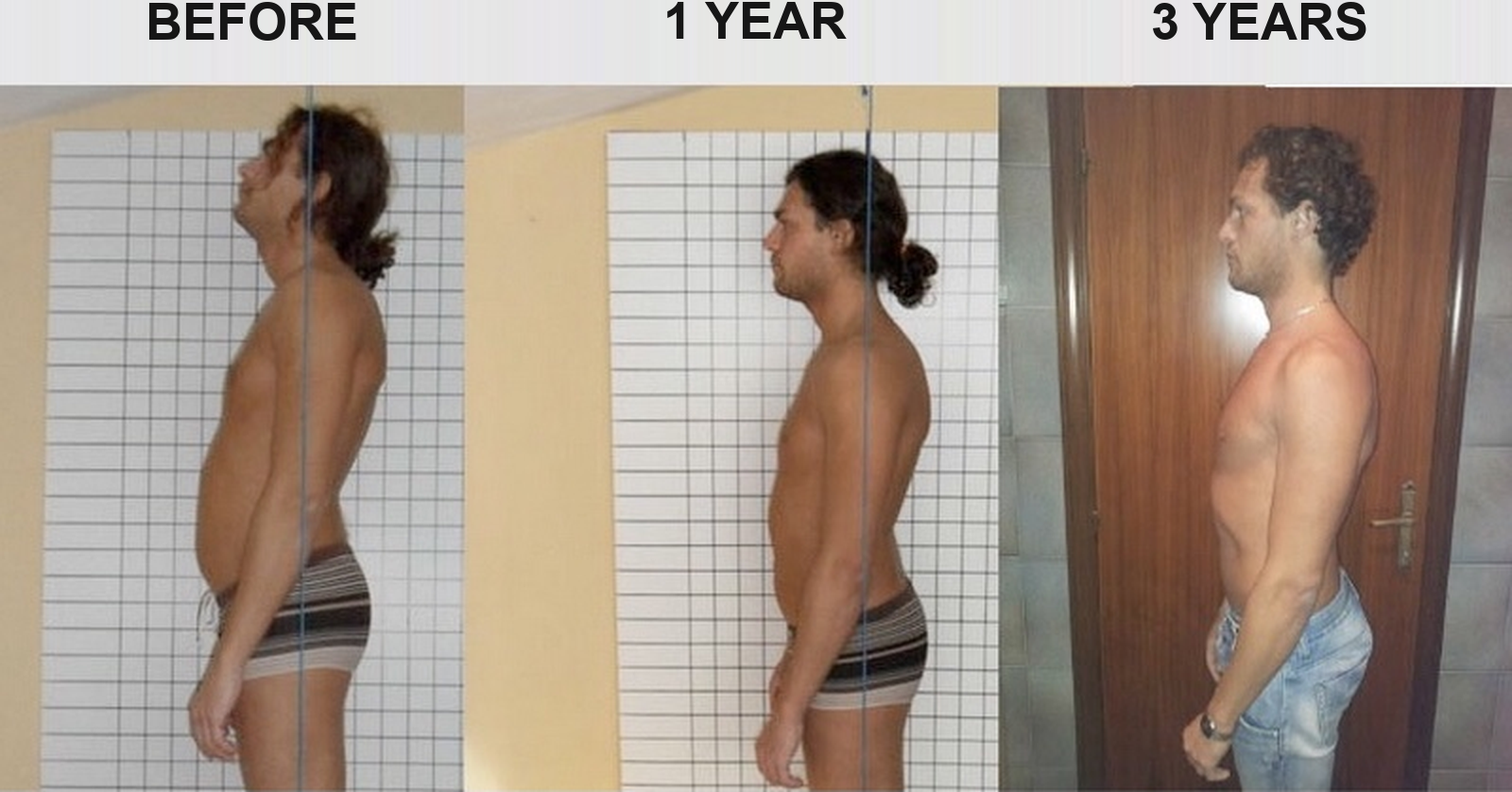
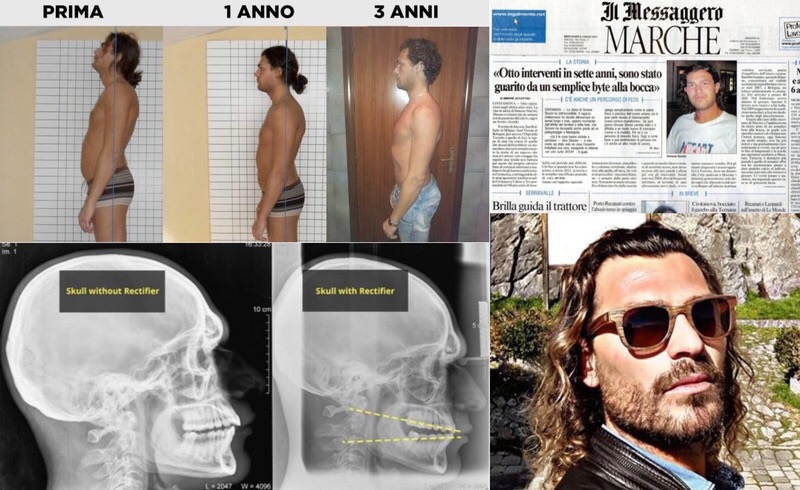
The creators of the Starecta method accidentally discovered that this cranio-mandibular imbalance directly affects pituitary function. When the head drops forward and the skull settles, the occipital bone compresses brain structures, including the pituitary, since this gland lies at the very base of the skull. Thus, this compression prevents the pituitary from functioning normally and, consequently, from producing LH and FSH. When the production of these hormones is interrupted, testosterone production by the testes is interrupted too. So we can see how a biomechanical problem directly causes a biochemical one. However, the connection also works in reverse: biomechanical stabilisation of the skull normalises pituitary function and consequently increases testosterone. We want to demonstrate this through the example of Simone Sincini, a former player for the Italian football club Civitanova.


The developers of the Starecta method discovered this connection by chance while examining Simone’s test results before and after he used the method. As you can see, before treatment began, Simone’s LH and FSH figures were 0.2 and 0 respectively. At that time, his skull was deformed and tilted to one side. With the help of the Rectifier intraoral device developed by the creators of Starecta, his LH and FSH levels returned to normal values (9.7 and 6.5 respectively). The footballer’s final X-ray corresponds to the high LH and FSH figures. This means that, with the Starecta method, the pituitary resumed the work needed to produce testosterone!


When the creators of the method shared this discovery with the community of people using Starecta, they received a very vivid comment from the girlfriend of one of the men using the method:

My God, so that is why it is happening! Not that I had any complaints before ***** began Starecta, but I DEFINITELY see changes..! I think all men should try it. What a wonderful discovery!
So, if you are unbalanced and have problems producing testosterone, it may be happening for precisely the reasons described above. The only way to solve this problem is to balance the body, achieve symmetry and allow the pituitary to work at full capacity again.

Rectifier: what it is and how it works—here.
Symmetry: why it drives us so wild, and how to achieve it—here.
_________________
The original article is on starecta.com; Russian translation

2 comments
Ask a careful question or add useful context. New comments are reviewed before publication.